A name that surfaced in a storm
Some names arrive in the public eye like thunderclaps. Jodi Routh’s did. Most of what people know about her traces back to the 2013 murders of Chris Kyle and Chad Littlefield and the 2015 trial of her son, Eddie Ray Routh. Yet behind that sudden storm is a quieter life. A Texas mother. A longtime wife. A school support staffer who preferred the background. When I piece together what is publicly known, I see a portrait of a woman whose world pivoted around family, work, and the relentless attempt to hold together the frayed edges of a son’s unraveling mental health.
Early life and work
Jodi Leigh Routh was born in Texas around 1962. The details of her early years are sparse, almost like a faded photo with only the outlines left. What stands out more is the job she chose. She worked as a teacher’s aide, the kind of person who sets up the classroom before sunrise and knows each child’s quirks by heart. It was through this work that she crossed paths with the Kyle family. Chris Kyle’s children attended the school where Jodi worked. It is here, quietly and within a community setting, that the connection began that would later define her in the wider public mind.
A family orbit
Jodi married Raymond Routh Sr., and together they raised two children in the Dallas area. Their daughter, Laura, grew into adulthood nearby, building a life of her own. Their son, Eddie, was born in 1987 with the easy Texas sun in his early story. He later served in the Marines, then returned home from deployments altered and uneasy. Like so many families, the Rouths closed ranks. Parents driving their grown son to work. Phone calls to hospitals. Stays in mental health facilities. Fear in the middle of the night, and the daily labor of hope in the morning.
In everything I can glean, Jodi’s family life does not read as glamorous or public. It reads as steady. Two parents, rooted in the same place for years. Adult children, one of them spiraling. A sister who loved her brother but worried about what he might do. A mother trying to thread the needle between pushing for help and protecting dignity. The kind of quiet heroics that rarely make headlines until tragedy calls the press.
The connection to Chris Kyle
Jodi knew Chris Kyle as a fellow school parent and a respected veteran who had made it his mission to be there for other veterans. She approached him for help with Eddie. In the most human sense, it made intuitive sense. Here was a decorated Navy SEAL, a person with a rare understanding of combat’s aftershocks, within the same local network as her. She hoped he could mentor Eddie, talk to him, pull him toward the kind of hard-earned stability that veterans sometimes find only with one another.
That hope became the hinge of a devastating day. Eddie rode with Kyle and Chad Littlefield to a range. The murders that followed devastated families and shook a country already attentive to the complexities of PTSD and veteran care. From Jodi’s side, the aftermath was a collapse. A mother who had asked for help now facing the unimaginable reality of what her son had done.
The trial and the public glare
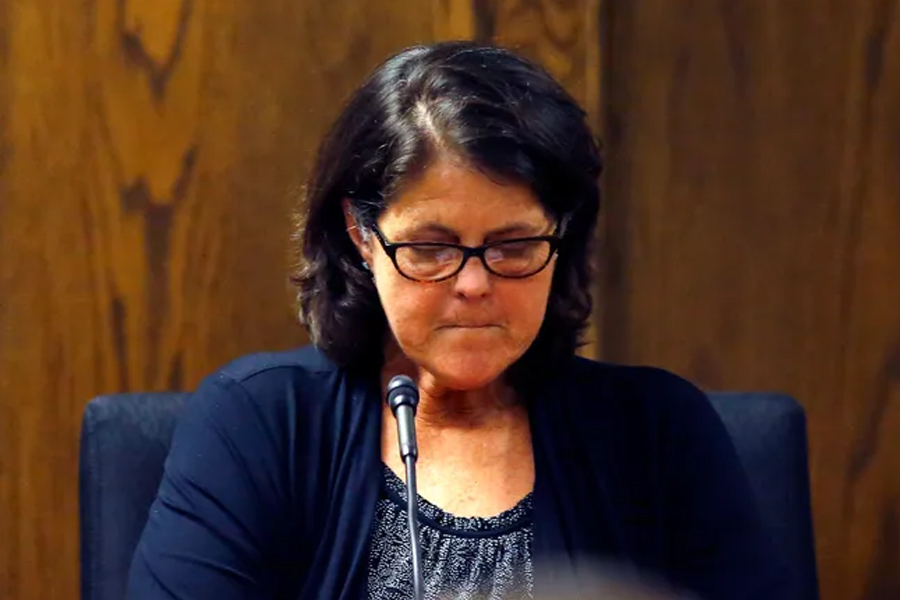
In 2015, Jodi Routh testified during her son’s trial. She described Eddie’s paranoia and deep mental distress. Her words were a window into years of trying to secure treatment and stability. Those proceedings also brought scrutiny. Some commentators accused her of failing to fully communicate Eddie’s recent hospitalizations and unstable state to Kyle. Public scrutiny has a way of simplifying what is in fact messy, human, and often contradictory. Jodi’s decisions were parsed in sound bites, but the fuller context shows a mother who repeatedly sought help and believed, perhaps too hopefully, in the possibility that mentorship could make a difference.
I have read accounts of her demeanor, and what stays with me is not a neat villain or an oblivious parent. It is a woman trying to steer through fog, making calls and taking chances in a system that often leaves families carrying more weight than they can bear.
Life after the storm
Since the trial, Jodi has lived mostly out of view. There are no regular interviews, no public campaigns. She appears to have kept to her community, her faith in the small labors of everyday life, and the private work of grief and coping that continues long after cameras pack up. There is no credible reporting about her finances, no catalog of professional achievements, and no sustained social media presence. Judging by the limited public trace, she chose privacy. She is, first and last, a mother and spouse whose life was reshaped by events she did not cause and could not control.
What the family story illustrates
The Routh family’s story is not a perfect parable. It is a tangle of love, duty, alarm, denial, persistence, and faith. It sits at the crossroads of American institutions that do not always align. Military service. Mental health systems. Community networks. Criminal justice. Families like the Rouths often hold their breath between these worlds, trying to bind together an answer from partial tools. Jodi’s story underscores how narrow the margins can be and how heavy the burden becomes for parents asked to be navigators, caretakers, advocates, and at times, reluctant gatekeepers.
Key figures in Jodi’s orbit
- Raymond Routh Sr. Husband and co-parent. Steady and present in interviews around the trial, he stands in the record as a father doing what he could with the information and resources at hand.
- Eddie Ray Routh Son, born in 1987. A Marine veteran whose service was followed by severe mental health struggles. He was convicted of capital murder in 2015 and is serving life without parole.
- Laura Blevins Daughter. She was pivotal in alerting authorities after Eddie confessed. Her public comments present a heartbreaking contrast between the brother she knew before service and the man he became afterward.
- Chris Kyle and Chad Littlefield The victims whose deaths reverberated across the nation, entwining their legacies with the Routh family in a way none of them would have wished.
The limits of what we know
Much about Jodi remains undisclosed. There is no reliable public record of a precise birthdate, educational history, or exact career timeline. There is no documented net worth, and there is no evidence of scandals in her own life separate from the fallout of her son’s crimes. Even within the high-profile swell of 2013 to 2015, she emerges as a private person thrust into a role no parent wants. If there is a moral in the gaps, it is that ordinary lives can be pulled onto extraordinary stages, and that the aftermath demands humility from those of us who watch from the seats.
A brief timeline of touchpoints
- Circa early 1960s Jodi is born in Texas.
- Long-term marriage to Raymond Routh Sr., building a family life in the Dallas area.
- Two children, Laura and Eddie, raised in a stable home.
- Work as a teacher’s aide brings her into the same school community as the Kyle family.
- 2013 Jodi asks Chris Kyle to help Eddie. Kyle and Littlefield are killed the same day they take Eddie to a range.
- 2015 Trial of Eddie Ray Routh. Jodi testifies about his mental health and their family’s efforts to get care.
- Mid 2010s onward Jodi steps back from public view. Only occasional references to the case surface in media or social chatter.
FAQ
How old is Jodi Routh?
She is widely reported to have been born around 1962, which would place her in her early to mid sixties today. The exact date has not been publicly confirmed.
Where is Jodi Routh from?
She is a Texas resident and has long-standing ties to the Dallas area.
What did Jodi Routh do for work?
She worked as a teacher’s aide at a local school. Her role connected her to families in the community, including the Kyles.
How did Jodi Routh know Chris Kyle?
Through the school community. Jodi’s work placed her in contact with parents, and Chris Kyle’s children attended the same school. She later approached him seeking support for her son as a fellow veteran.
Who are Jodi Routh’s immediate family members?
Her husband is Raymond Routh Sr. She has two children, Laura and Eddie. Laura married and took the surname Blevins. Eddie served in the Marines and was convicted of the 2013 murders of Chris Kyle and Chad Littlefield.
Did Jodi Routh try to get mental health help for Eddie?
Yes. Accounts from the trial and public reporting indicate multiple efforts to obtain treatment and support, including hospitalizations. She described Eddie’s paranoia, anxiety, and suicidal ideation, and sought interventions over time.
Why do some people criticize Jodi Routh?
Some critics focus on whether she fully disclosed the immediacy of Eddie’s mental health crisis when asking Chris Kyle for help. This criticism sits within a broader debate about what families should disclose, how much, and to whom, particularly when they are striving to preserve an adult child’s dignity while seeking aid.
Is there any information about her net worth or current activities?
No reliable public information exists about her finances or current daily life. Given her background, it is reasonable to assume she leads a private, modest existence, but specifics are not documented.
Is Jodi Routh active on social media?
There is no confirmed, active public profile linked to her. Mentions of her name on social platforms usually refer back to the events of 2013 and 2015 rather than to any posts by Jodi herself.
Has Jodi Routh appeared in the news recently?
After the trial period and a few interviews in 2015, there has been little to no new reporting focused on her personally. Most references are historical recaps of the case or discussions of its broader implications.