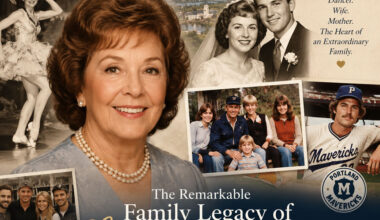
A life shaped by family and a steady public presence
I see Leagrey Dimond as someone whose life moves in two directions at once. One points inward, toward family, memory, and inheritance. The other points outward, toward books, philanthropy, and a careful public voice. Her story is not loud. It is more like a lamp in a reading room, warm and constant, making the edges of a larger family history easier to see.
Leagrey Dimond is best known as the daughter of Audrey Geisel and the stepdaughter of Theodor Geisel, better known to the world as Dr. Seuss. She is also linked to a wider family line that includes her sister Lark Grey Dimond-Cates, her father Edmunds Grey Dimond, and her maternal grandparents Norman Alfred Stone and Ruth Benson. That family web matters because it explains much of the atmosphere around her life, a mix of cultural legacy, privacy, and responsibility.
I think of her biography as a story that never tried to become a spectacle. Instead, it became a series of practical choices, a bookstore here, a donation there, a public comment when needed, and a deliberate retreat when attention became too bright.
Childhood, parentage, and the family circle around her
The Dimond family was both ordinary and exceptional. As Dr. Seuss’ widow and founder of Dr. Seuss Enterprises, her mother Audrey Geisel became famous. Medical doctor Edmunds Grey Dimond was her father. Audrey and Edmunds have two children, Leagrey and Lark Grey Dimond-Cates.
Sibling relationships matter. Artist and sculptor Lark Grey Dimond-Cates links her work to Dr. Seuss through public art and museums. Leagrey and Lark had different careers but shared a family. One worked in art, one in books, and both remembered a household where imagination and private history intermingled.
Audrey Geisel drives Leagrey’s family story. Before becoming famous, she was a nurse and mother. She married Theodor Geisel in 1968, when Leagrey was little. That marriage introduced a famous stepfather to a complicated household. Leagrey and Dr. Seuss became household members and the secret scaffolding of a renowned literary empire.
In the portrait, her grandparents Norman Alfred Stone and Ruth Benson matter. Under the brighter public levels is the older familial branch. Even great families have roots in older names, migrations, and work. Leagrey’s life is based on that.
A bookstore life and the discipline of independent work
For much of her adult life, Leagrey Dimond was identified with books in a very direct way. She owned and ran Thidwick Books in San Francisco, and that alone tells me a lot about her temperament. A bookstore is not just a business. It is a daily act of judgment, patience, and memory. It requires listening to customers, noticing patterns, and keeping a kind of literary weather report in your head.
Thidwick Books became a neighborhood fixture. Leagrey spent years in the rhythm of shelves, paper, regular customers, and the slow pulse of independent retail. She ran the store for decades, including a long stretch on Clement Street. That kind of work is modest in appearance and demanding in reality. Every day asks for attention. Every title on the shelf is a small promise.
Her career also reflects resilience. The bookstore faced legal and structural pressures, and at one point the original location closed. Later, the store reopened elsewhere, and then eventually closed again after a long run. That arc feels like many independent businesses, especially small bookstores. They rise, adapt, bend, and sometimes disappear, but they leave behind a civic memory. People remember the smell of paper, the cramped aisles, the face of the owner behind the counter.
Leagrey Dimond did not become famous for chasing scale. She built something narrower and more durable, a place where reading could happen one hand-to-hand exchange at a time.
Audrey Geisel, Dr. Seuss, and the burden of legacy
The family name attached to Leagrey Dimond brings with it a strong public shadow. Audrey Geisel managed and protected the Dr. Seuss legacy, and Theodor Geisel’s work became one of the most recognizable brands in American children’s literature. That meant Leagrey lived close to a cultural engine that kept turning long after the original author’s life.
This proximity to legacy appears to have shaped her public comments over the years. She spoke about Dr. Seuss not only as a famous figure, but as a stepfather in the home, a human being in family life. At the same time, she acknowledged the complicated conversation around some of his early imagery. That balance matters. It suggests she was not interested in simple praise or simple condemnation. She seemed to want a fuller frame, one that held affection, history, and critique in the same room.
I find that attitude revealing. It shows a person who understands that family memory is rarely clean. It is stitched together from gratitude, tension, silence, and selective remembrance. In a family attached to such a large literary brand, that kind of nuance is its own form of courage.
Philanthropy, giving, and a private sense of responsibility
After the bookstore years, Leagrey Dimond became more visible in philanthropic circles. Her giving appears practical rather than theatrical. She supported charities, community groups, and museums. She also contributed to institutions that preserved family and cultural history.
What stands out to me is the combination of discipline and generosity. She reportedly set aside money regularly for donation and used her resources to support causes that mattered to her. That makes her public profile feel grounded. This is not the language of grand gestures. It is the language of habits, and habits can be more powerful than headlines.
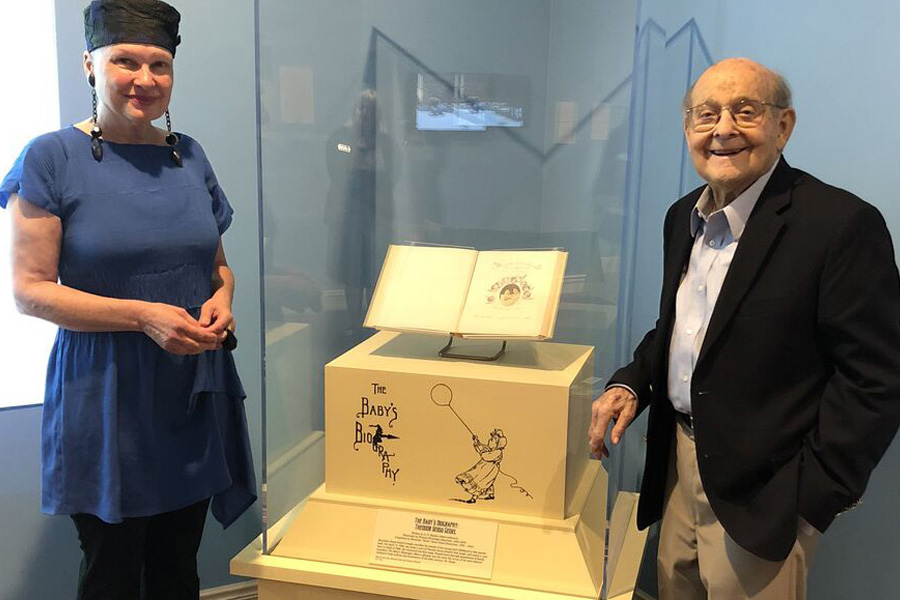
Her connection to the Springfield Museums is especially meaningful. Family objects, memorabilia, and other personal items tied to Dr. Seuss were donated and displayed there, helping shape a public memory of the Geisel family. Leagrey’s role in that process suggests stewardship. She was not just a family member holding on to objects. She helped move them into shared space, where they could become part of a larger story.
The people around Leagrey Dimond
Publicly, Leagrey Dimond’s family is small, yet each member is important.
Her mother Audrey Geisel defines the family’s public image. Dr. Seuss’s legacy was stewarded by this nurse and mother. Life linked private caring to public influence.
Her father, Edmunds Grey Dimond, is from the family that gave Leagrey and Lark their names and household structure. His presence reminds me that famous mixed families start with ordinary marriages, houses, and responsibilities.
Sister Lark Grey Dimond-Cates provides creative contrast. Lark was sculptor and visual artist, whereas Leagrey focused on reading and philanthropy. The sisters resemble limbs of the same tree, each seeking for different light.
The stepfather, Dr. Seuss, made the family famous. He made imagination a national language, and his presence in the family gave Leagrey a cultural inheritance that went beyond the household.
Norman Alfred Stone and Ruth Benson, her maternal grandparents, are farther back, yet they significant because every family biography has roots before headlines.
FAQ
Who is Leagrey Dimond?
Leagrey Dimond is a San Francisco bookseller, philanthropist, and family member of the Geisel legacy. She is the daughter of Audrey Geisel and Edmunds Grey Dimond, and the stepdaughter of Dr. Seuss. Her public life has centered on books, donations, family history, and community support.
What is Leagrey Dimond known for professionally?
She is best known for owning and running Thidwick Books in San Francisco for many years. Her bookstore work gave her a practical identity built on reading, retail, and neighborhood connection. Later, she became known for philanthropy and support of museums and community groups.
Who are Leagrey Dimond’s immediate family members?
Her immediate family includes her mother Audrey Geisel, her father Edmunds Grey Dimond, her sister Lark Grey Dimond-Cates, and her stepfather Theodor Geisel, known as Dr. Seuss. Her maternal grandparents are Norman Alfred Stone and Ruth Benson.
What is her connection to Dr. Seuss?
She is Dr. Seuss’s stepdaughter. He entered her life when he married Audrey Geisel in 1968. Leagrey has spoken publicly about him with both affection and a sense of context, recognizing his family role and the complexity of his literary legacy.
Did Leagrey Dimond work outside the family name?
Yes. She ran an independent bookstore for years, which required business judgment, daily discipline, and local trust. Her later public identity also includes charitable giving and support for cultural institutions, which stands apart from the fame of the Geisel name.
Why does her family history matter?
Because it explains the balance in her life. She comes from a family tied to one of the most recognizable figures in children’s literature, yet her own path remained quieter and more grounded. Her family history gives context, but it does not erase her independent work in books, giving, and preservation.