A beginning in gilded rooms
I first picture a January morning in Manhattan, 1904, a nursery that looked out on a city rising fast, and a child named Mary Cathleen Vanderbilt. She arrived on January 23, the only child of Reginald Claypoole Vanderbilt and his first wife, Cathleen Gebhard Neilson. Her name carried the weight of steam, steel, and society. Her parents later divorced, and her father remarried. That second marriage produced Cathleen’s famous half-sister, Gloria Vanderbilt, a name that would eclipse almost every other Vanderbilt of her generation. Cathleen stood in an earlier, quieter light.
The outlines of her life are crisp where the press paid attention and soft where it did not. She stepped into debutante halls, traveled, married, and moved again. She lived in the shade and shine of a family that had shaped New York itself. Through it all, she remained an heiress in the classic American sense: well-known, well-photographed, and firmly anchored to a fortune built before her time.
A house of names
To understand Cathleen, I map her position on a family tree as dense as a winter hedge. Her father, Reginald, was the youngest son of Cornelius Vanderbilt II and Alice Claypoole Gwynne. That pair placed her directly in the largest branch of the Vanderbilt dynasty, the line that built the Fifth Avenue chateau, The Breakers in Newport, and a social reign that defined an era. Her paternal aunt Gertrude Vanderbilt Whitney founded the Whitney Museum of American Art, another reminder that the family collected canvases as readily as it collected railroads.
Tracing upward from Cornelius II, you meet William Henry Vanderbilt and Maria Louisa Kissam, figures from the heart of the Gilded Age. Looking through Alice’s side leads to Alice’s parents, Abraham Evan Gwynne and Rachel Moore Flagg, a lineage woven into early American prominence. For Cathleen, these names were not just ancestors. They were the architecture of expectation.
Debut, marriage, and a son
Like many women of her station, Cathleen’s life entered the public record through family milestones. In 1923 she married Henry Cooke Cushing III, a match that drew the expected flurry of society-page attention. The following year she had a son, Henry Cooke Cushing IV. In the elegant shorthand of the time, they were Mr. and Mrs. Cushing with a nursery in tow, the portrait framed by teas, benefits, hotel registries, and seaside seasons.
Those early years mark the easiest part of her story to tell. The photographs still glow. Yet as the 1920s waned and the 1930s began to bite, Cathleen’s marriage ended. The record speaks in notices instead of narratives, but the shape is clear enough: she left the first chapter behind and turned the page.
The second act
In 1932, Cathleen married Lawrence Wise Lowman, a rising figure in broadcasting who would hold senior posts in radio and later television. If her first marriage felt traditional, the second hinted at the modern. Media was the new engine of American life, and Lowman stood at its controls. Their union was brief. A Cuban decree dissolved it in 1940, a legal detail that says almost as much about the pace of interwar divorce as it does about their relationship. Sometimes the archive shows you a signature and expects you to imagine the room.
Havana days
That same year, in October 1940, Cathleen married again, this time to a Havana publisher named Antonio, also recorded as Martín, Arostegui. She began using the name Cathleen Vanderbilt Arostegui and, for a vivid spell, Havana became her landscape. I imagine her moving through palm-shaded boulevards, another northern presence amid the island’s layered cosmopolitanism.
Havana was not only a romantic choice. It was a place where New World wealth and Old World manners found an easy truce. Cathleen’s last years unfolded there, away from the Main Line and Fifth Avenue, away from Newport porches and New York chandeliers. On January 25, 1944, two days after her fortieth birthday, she died in Havana following an illness reported to have lasted two months. Contemporary notices point to a kidney ailment. She was laid to rest in Colón Cemetery, the grand necropolis of that city, where names find permanence in warm stone.
Money and myth
Whenever I write about a Vanderbilt, readers ask about money, and for good reason. When Reginald died in 1925, his daughters were the principal heirs to his estate. The figure was large by any measure of any era, structured in trusts that served to enfold Cathleen’s adult life. It is tempting to translate those old millions into modern calculators, but inheritance is not a scoreboard. What matters is how it shaped her: a life assured, protected, and press-worthy, yet not one that pressed outward into a public career.
There is no record of Cathleen seeking a vocation beyond her station. No gallery with her name on the wall, no professional headline that outlasted the day. The work she did was the work expected of an early twentieth century heiress: manage households, keep appearances, raise a child, marry well or try again. If her story feels understated, that is only because the social stage has changed. In her moment, it was a script known by heart.
The quiet sister
In almost every modern retelling of the family, Cathleen appears next to her younger half-sister, Gloria. The contrast is a story in itself. Gloria became a designer, painter, muse, and media figure. Cathleen remained a society name, present in registries and photo captions, absent from the broader cultural theater. She died decades before Gloria’s later fame reached its apex. By lineage, Cathleen was an aunt to Gloria’s children, including Anderson Cooper, but she never lived to see that generation.
The pairing does not diminish her. It simply reminds me that some lives burn with neon and others with lamplight. Each reveals a corner of the age.
What endures
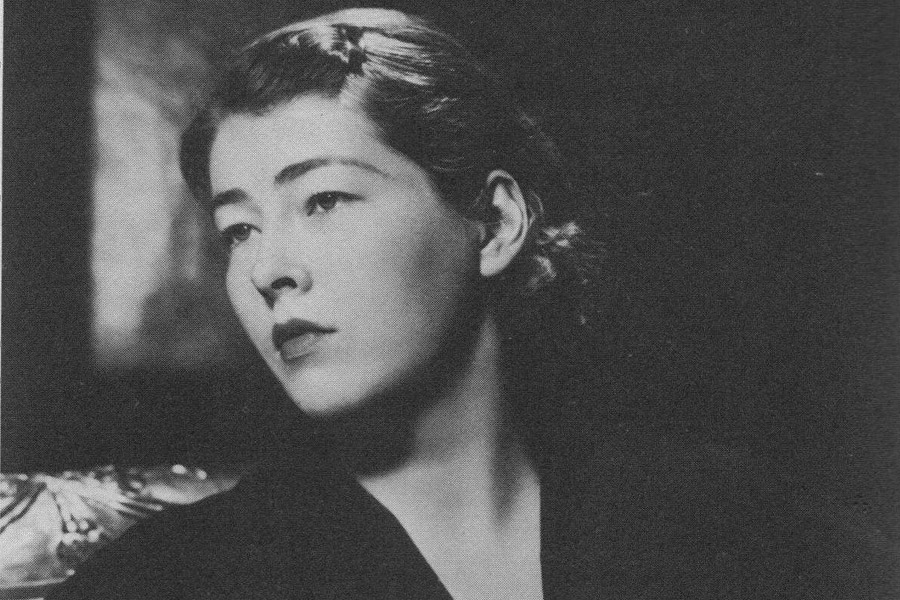
To finish, I look at Cathleen’s portrait. A young woman with family eyes, a mind sculpted by finishing schools and travel trunks, who traveled from Manhattan to Havana by inheritance and choice. Although short, her story threads across the greatest rooms of American social history like an exquisite tapestry.
FAQ
Who was Cathleen Vanderbilt?
New York-born heiress and socialite Cathleen Vanderbilt was born in 1904. She was from the Vanderbilt family and lived a life of society, travel, and family rather than public service.
When and where was she born and when did she die?
She was born on January 23, 1904, in Manhattan, New York City, and died on January 25, 1944, in Havana, Cuba, at the age of 40.
Who were her parents?
Her father was Reginald Claypoole Vanderbilt, youngest son of Cornelius Vanderbilt II and Alice Claypoole Gwynne. Her mother was Cathleen Gebhard Neilson, later known by her remarried name, Colford.
Did she have siblings?
She had a half-sister, Gloria Vanderbilt, through her father’s second marriage. By that connection, Cathleen is an earlier, quieter figure in a family later defined by Gloria’s public career.
Whom did she marry?
Cathleen married three times. Her first marriage, in 1923, was to Henry Cooke Cushing III. In 1932 she married Lawrence Wise Lowman, a broadcasting executive. In October 1940 she married Antonio, also recorded as Martín, Arostegui, a publisher in Havana.
Did she have children?
Yes. She had one child, Henry Cooke Cushing IV, born in 1924.
What did she inherit from her father?
When Reginald Vanderbilt died in 1925, his daughters were the principal heirs to a substantial estate, largely structured in trusts. These funds secured Cathleen’s lifestyle throughout adulthood. There is no reliable modern net worth figure specific to her.
Did Cathleen have a career or public role beyond society life?
No professional career is recorded for Cathleen. Her public presence centered on social events, travel, and family milestones. She did not become a cultural or business figure in her own right.
Why did she live in Havana?
Havana became central to her life after her 1940 marriage to Antonio or Martín Arostegui, a publisher based there. She resided in the city during her final years and died there in 1944.
What caused her death?
Notices at the time reported a two-month illness. Accounts identify a kidney ailment as the cause.
Where is she buried?
She is buried in Colón Cemetery in Havana, a resting place known for its monumental architecture and historic significance.
How is she related to Anderson Cooper?
Through her half-sister, Gloria Vanderbilt, Cathleen is a half-aunt to Anderson Cooper. She died many years before his birth and career.