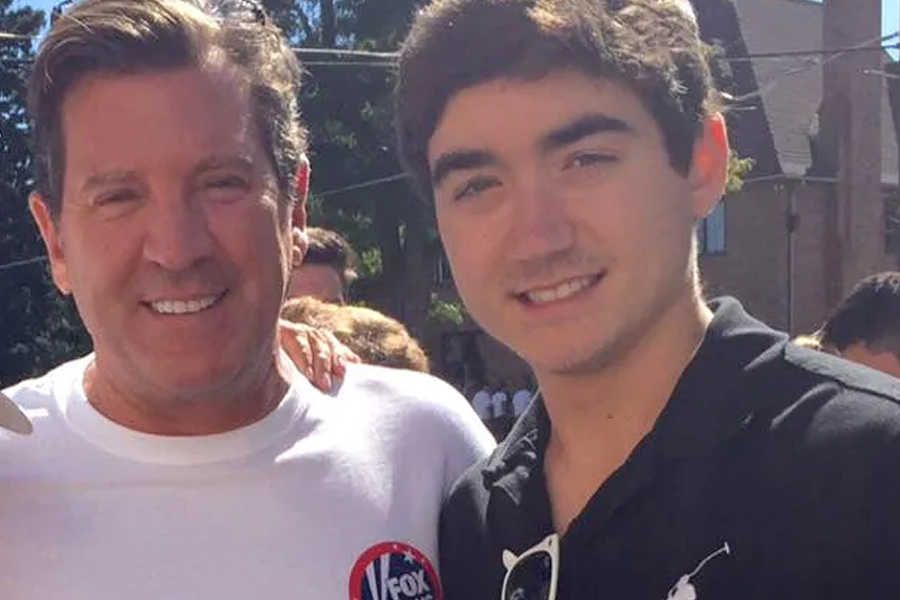
A Short Portrait
I often think of certain names as lanterns. They cast light on more than a single story. Eric Chase Bolling is one of those names. He was a son, a student, a friend. He was nineteen, at an age where plans and possibilities crowd the horizon. When I picture his life, I see a young man in a college town scanning textbooks and group chats, juggling lectures and laughter, collecting the puzzle pieces that might form a future. His story, brief and bright, now carries a message that echoes beyond his time on campus.
Early Years and Campus Life
Eric Chase was born in 1998 and grew up in New Jersey before heading west for college. In Boulder he settled into life at the University of Colorado. He studied economics. He joined Sigma Pi. He did what students do, threading classes with social rituals and a bit of altitude-tinged adventure. For anyone who has walked those brick paths and watched the Flatirons catch fire at sunset, it is easy to imagine him finding his stride, mapping out all the ordinary and extraordinary moments that make campus life feel electric.
In my mind’s eye, I see him that sophomore year, learning the discipline of supply curves and tradeoffs, teasing out how markets move and why people make certain choices. Economics is careful work, precise and interpretive at once. It suited the moment in his life. He was building frameworks, the way we all do in college, to understand money, risk, opportunity, and consequence.
Family Ties and Public Life
Eric Chase was the only child of Eric and Adrienne Bolling. Families live in layers, and theirs lived partly in the public eye due to his father’s career in television and political commentary. The work of public life can be loud and relentless, yet home is where the quieter truths unfold. Parents, a son, routines and milestones, the ordinary rituals that stitch a family together. By all accounts, Eric Chase was loved fiercely. To be an only child is to be both a center of gravity and a singular constellation. The pride and hope his parents carried for him is easy to feel, even from a distance.
The Night That Changed Everything
September 8, 2017 marked a turning point none of us can fully measure. Eric Chase was found in an off-campus apartment near CU Boulder. The Boulder County coroner later determined that his death was an accidental mixed drug intoxication. Tests showed multiple substances, including cocaine, marijuana, alprazolam, and opioid drugs like fentanyl as well as an analog. Nineteen is young. Too young to be a headline. Too young to be a cautionary tale.
I write this carefully because tragedy demands respect. The facts are stark, and they matter. At the same time, they should not be the only thing we remember. A life is more than the last page. Still, the last page can carry instructions for those of us left reading. Fentanyl and its analogs are potent, unpredictable, and unforgiving. A single night can become a cliff. For families, the fall brings shock, then silence, then a storm of grief that does not fit neatly into words.
Grief to Purpose: Advocacy and the Eric Chase Foundation
There is a second chapter to this story, one written by Eric’s parents in the long shadow of loss. Eric Bolling used his platform to speak openly about the dangers of opioids and fentanyl. He talked not only about numbers and policy but about a son’s smile, a phone that would not ring, the depth of a void. He established the Eric Chase Foundation, turning pain into public action. The foundation’s work is a lighthouse in a rough sea, guiding others toward awareness, prevention, and the resources that can save lives.
I have repeatedly witnessed people find meaning in grief. Though it doesn’t solve sadness, it leads to meaning. The death of Eric Chase sparked urgent and practical lobbying. The story is clear. The event should remind us that risk margins are thin. Education is essential. A lifeline.
Remembering Chase
Memory is a mosaic. We assemble it from quotes and anecdotes, from photos and fragments. For Eric Chase, the campus years are central pieces. A fraternity brother. An economics student. Someone who belonged to a landscape of lectures and late nights and the rhythmic pulse of a college town. Close your eyes for a moment and you can hear the footfalls on the way to class, the laughter at a kitchen table, the hum of ambitions being sketched out with friends. Those scenes deserve space.
When I write about him, I try to keep sight of both halves of the narrative. A young man whose life was just beginning. A family who lost their only child. A father who turned his grief into a campaign for awareness. A name that became a beacon for conversations we are often too late to start. The story is humble, human, and never quite done. Because each time someone hears it, another conversation begins. Another step is taken. Another risk is weighed. Another life, perhaps, is saved.
FAQ
Who was Eric Chase Bolling?
Eric Chase Bolling was a college student and the only child of Eric and Adrienne Bolling. He was nineteen years old at the time of his death and is remembered by those who knew him as a bright, engaged young man in the middle of his university years.
What did he study and where?
He studied economics at the University of Colorado Boulder. While there, he was a member of Sigma Pi fraternity and lived the rhythms of campus life in Boulder.
How did he die and what did officials determine?
He died on September 8, 2017 in an off-campus apartment near CU Boulder. The Boulder County coroner ruled his death accidental, caused by mixed drug intoxication. Toxicology reports identified multiple substances, including fentanyl and a fentanyl analog, alongside other drugs.
Who are his parents and did he have siblings?
His parents are Eric Bolling, a television host and commentator, and Adrienne Bolling. Eric Chase was their only child.
What is the Eric Chase Foundation?
The Eric Chase Foundation was established in his memory by his family to raise awareness about opioid risks, particularly fentanyl, and to support education and prevention efforts. It represents a commitment to turning personal loss into public good.
Why is his story often cited in discussions of opioids and fentanyl?
His death underscores how quickly and unexpectedly the risks associated with opioids and fentanyl can become fatal. Because his family chose to speak openly and create an advocacy platform, his story is frequently referenced as a powerful example of why awareness and prevention are critical.