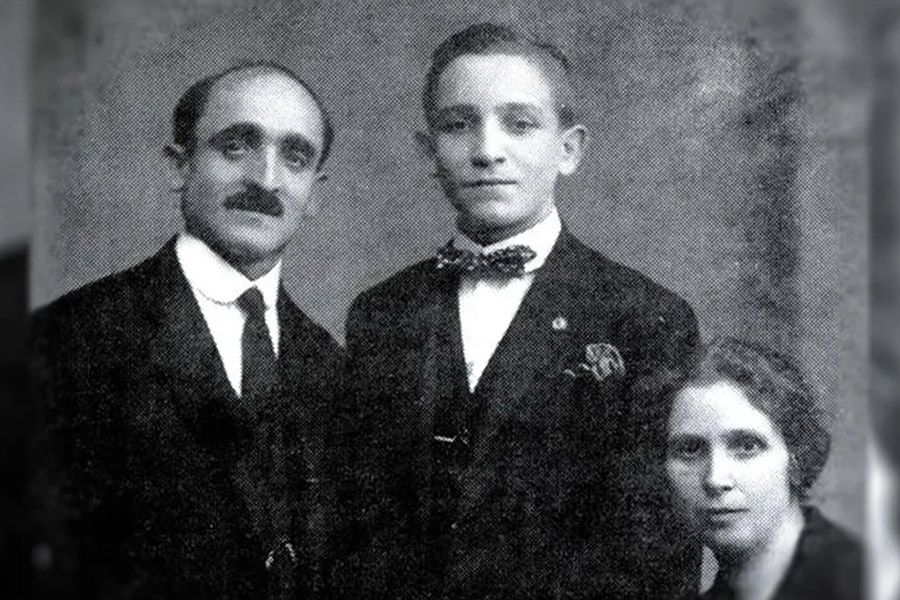
A Piedmontese Beginning
When I picture Giovanni Angelo Bergoglio’s childhood, I see the rolling hills of Asti and paths worn by working hands. He was born on August 13, 1884, in Strada Bricco Marmorito, in the province of Asti, within Italy’s Piedmont region. His parents, Francesco Bergoglio and Maria Bugnano, kept him rooted in the rhythms of rural life. The family’s story reaches deep into the Piedmontese soil, with ancestral threads running through villages like Schierano and Cocconato. His patrilineal line can be traced across eight generations, back to Bernardo Bergoglio, who died around 1612 in Robella.
Giovanni did not carry academic credentials or lofty titles. He carried skill and tenacity. Like many young men from the countryside in the early twentieth century, he left school early, learning trades that offered steady work and a foothold in a changing world. He was part of a generation that saw Italy’s industrialization up close, felt the tremors of social upheaval, and began to imagine futures beyond the farm.
Turin Years and a Young Family
At twenty-two, Giovanni moved to Turin in 1906. The city had urgency in its air. He set himself up as a liquorista, distilling and selling spirits, and ran a small shop that traded in coffee and liquors. This was practical entrepreneurship, the kind that rests on habits of craft and consistency. He married Rosa Margherita Vassallo on August 20, 1907, and together they began building a family of their own.
Their children followed in a gentle rhythm. Mario arrived in April 1908, then Giuseppina in 1910, Luigi in 1912, Alberto in 1914, and finally Blanca Maria in early 1917. The First World War years were unkind to many families, and by 1918 Giovanni brought his household back to Asti. Even there, the pressures of the postwar economy gathered. Work was unsteady. The future felt narrow.
The Ticket Not Taken
In 1927, Giovanni made a decision that would redefine his family’s path. He bought tickets for passage to Argentina on the SS Principessa Mafalda. Then he paused, choosing to sell off household possessions and settle accounts before crossing the ocean. That delay became a hinge of fate. The Principessa Mafalda sank off the Brazilian coast in 1927, a maritime disaster that claimed hundreds of lives. Giovanni’s family was not aboard only because he waited.
He did not abandon the plan. In early 1929, he left Italy for Buenos Aires. When I imagine the dockyards, I see a middle-aged merchant with steady eyes, his wife beside him, their adult son Mario in step. Records capture them firmly in time and role: Giovanni as a merchant in his mid-forties, Rosa as a homemaker of the same age, and Mario a young accountant of twenty-one. They reached Argentina with the aspirations of modest people who wanted stability, work, and a measure of peace.
Buenos Aires, Work, and Quiet Dignity
Giovanni settled into life in Buenos Aires with the same practical focus he had honed in Turin. He worked with a family paving company, earning a living that lifted the household into a narrow but sturdy middle ground. These were not years of headlines or fortune. They were years of building, turning labor into food on the table and a future for the children.
In 1936, a grandson was born to Mario and his wife, Regina María Sívori. They named him Jorge Mario. The child would eventually become Pope Francis, though in those first years his world was the neighborhood and the voices in the family kitchen. Giovanni’s home life had the texture of closeness and craft, with a grandmother, Rosa, who would emerge as a moral lodestar for the grandchildren. Her spiritual witness, often invoked by Pope Francis later in life, gave the household a steady glow.
Loss came as well. Giovanni’s son Mario died in 1959. Rosa likely passed around 1961, leaving Giovanni to carry the weight of family memory and presence. He died on October 30, 1964, in Buenos Aires, and was buried in Cementerio San José de Flores. His life reads like a quiet ledger of devotion: a man who faced economic storms, crossed an ocean, worked with his hands, kept his family together, and set the stage for a grandchild who would speak to the world about mercy.
The Family Constellation
Family for Giovanni was not an abstraction. It was the daily practice of belonging. His parents were Francesco and Maria. His siblings included Lorenzo Giovanni Albino, Iride, Eugenio, and Vittorio, as well as one whose name remains private in the records. Giovanni married Rosa Margherita Vassallo, daughter of Pietro Vassallo, in 1907. Their children formed the backbone of his legacy: Mario, Giuseppina, Luigi, Alberto, and Blanca Maria.
Through Mario’s marriage to Regina María Sívori came five grandchildren: Jorge Mario, Oscar Adrián, Alberto Horacio, Marta Regina, and María Elena. Some have passed on, while María Elena remains, a living link to those early Argentine years. Within this constellation, one star shines with global magnitude. Yet Pope Francis has never cast his light in isolation. He has consistently pointed back to the family hearth, speaking of grandparents, especially Rosa, whose steady faith shaped him in his youngest days.
Timeline of a Migrant Life
I think of Giovanni’s timeline as a series of firm stones laid across a river. In 1884, he was born in Asti. In 1906, he moved to Turin. In 1907, he married Rosa, and from 1908 through 1917, the children arrived and the shop thrived enough to sustain them. In 1918, the family returned to Asti, a move that mirrored Italy’s unsettled mood after the war. In 1927, he bought ocean tickets, then paused. The ship he first chose sank without him. In early 1929, he left for Buenos Aires, and found steady work. In 1936, his grandson Jorge Mario was born. Losses followed in time, and in 1964, Giovanni’s own life came to its quiet close.
Legacy in the Words of a Grandson
It is one thing to enumerate dates and another to understand a life’s echo. Giovanni’s echo is strongest in the testimony of his grandson. Pope Francis has often returned to the example of his grandparents, their humility, their simple faith, their solidarity with the poor and the stranger. When I map that testimony back onto Giovanni’s story, I see the silhouette of an immigrant who valued work over status, family over noise, substance over spectacle. He did not seek to be remembered, yet he remains, as so many immigrants do, in the values of those they raised.
FAQ
Who was Giovanni Angelo Bergoglio?
Giovanni Angelo Bergoglio was an Italian immigrant from Asti in the Piedmont region, born in 1884. He worked as a distiller and small shopkeeper in Turin, later emigrated to Buenos Aires in 1929, and lived a modest, family-centered life until his death in 1964. He is best known today as the paternal grandfather of Pope Francis.
What work did Giovanni do in Italy and Argentina?
In Italy, Giovanni worked as a liquorista, distilling spirits and running a small shop that sold coffee and liquors. After emigrating to Argentina, he joined a family paving company in Buenos Aires. His career was rooted in small-scale commerce and skilled labor, without claims to notable wealth or public acclaim.
How is he related to Pope Francis?
Giovanni was the father of Mario Giuseppe Francesco Bergoglio, who married Regina María Sívori. Their eldest child, born in 1936, is Jorge Mario Bergoglio, known to the world as Pope Francis. The Pope often speaks of the formative influence of his grandparents.
What happened with the SS Principessa Mafalda?
In 1927, Giovanni purchased tickets for his family to sail to Argentina on the SS Principessa Mafalda. He delayed departure to settle affairs, and the ship later sank off the Brazilian coast. The family avoided the tragedy by virtue of that delay and emigrated in early 1929 instead.
Who were his immediate family members?
His parents were Francesco Bergoglio and Maria Bugnano. He married Rosa Margherita Vassallo in 1907. Their children were Mario, Giuseppina, Luigi, Alberto, and Blanca Maria. Among his siblings were Lorenzo Giovanni Albino, Iride, Eugenio, and Vittorio, along with another sibling whose name is kept private in available records.
Where and when did he die, and where is he buried?
Giovanni died on October 30, 1964, in Buenos Aires. He is buried at Cementerio San José de Flores, a resting place for many immigrant families whose lives bridged continents and generations.
Are there records of wealth or scandals?
No. Giovanni’s life reflects steady work and family commitment. There is no record of financial prominence, and no public controversies are associated with him. His legacy is the resilient, everyday heroism of a migrant parent.
What shaped his values and outlook?
Giovanni’s values were shaped by a rural Piedmontese upbringing, the demands of trade in an industrial city, and the trials of migration. His home life reflected discipline, thrift, and faith. Through his wife Rosa, a powerful spiritual witness in the household, those values took root in later generations.
Who were his grandchildren through Mario and Regina María Sívori?
Their children were Jorge Mario, Oscar Adrián, Alberto Horacio, Marta Regina, and María Elena. Some have passed, while María Elena remains a voice recalling the family’s early years in Argentina and the simple strengths that defined them.