Early Life and Education
I have always found the lives of second-generation luminaries compelling, a prism through which fame refracts into vocation. Henry Fielding Dickens was born on 16 January 1849 in Marylebone, London, eighth among ten children of Charles Dickens and Catherine Hogarth, and named in homage to the novelist Henry Fielding. He came of age in a household where storytelling was currency and observation was art. Yet his path tilted toward logic as much as lyric. At Trinity Hall, Cambridge, he read mathematics and took his degree in 1872, a pivot that would anchor him in the measured world of law rather than the vibrant theater of letters that had made his father a national figure.
The Making of a Barrister
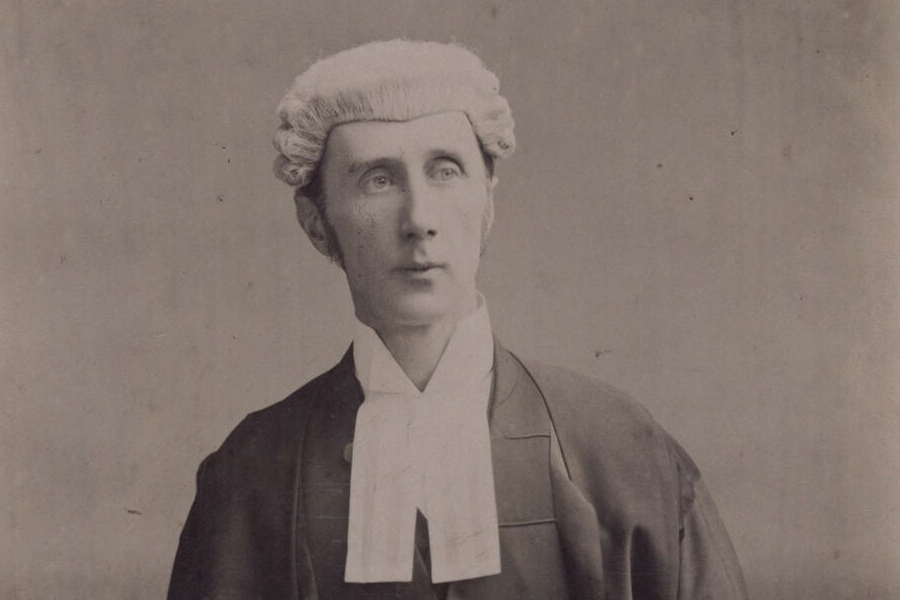
I picture young Henry walking through the Inns of Court, brief in hand, mind honed to the precise edge that advocacy demands. He was called to the Bar at the Inner Temple in 1873. The legal profession is a long game, and Henry played it with steady resolve. He took silk as a Queen’s Counsel in 1892, became a Bencher of the Inner Temple in 1899, and built a reputation for able defense and thoughtful judgment. It was a career that prized forensic clarity and public duty, and it brought him into the civic life of London just as the city itself churned toward modernity.
On the Bench at the Old Bailey
From 1892 to 1918 Henry served as Recorder of Maidstone, overseeing the administration of local justice. His most prominent judicial appointment came in November 1917 when he was made Common Serjeant of London, the second senior judge at the Old Bailey, a post he held until his retirement in October 1932. The title sounds antique, but the work was immediate and human, each case a knot in the social fabric that he was tasked with untangling.
His tenure coincided with a period of upheaval and recovery, bookended by war and the shifting moral landscape of the early twentieth century. Henry brought a measured presence to the bench. One oft-repeated courtroom quip has a defendant telling him, You ain’t a patch on your father. The moment crystallizes a truth about inheritance. Henry did not write novels. He wrote judgments, with consequences fixed not in pages but in lives.
In 1922 he was knighted, recognition that he had contributed something steady and essential to public life.
Family Ties and Notable Descendants
The Dickens family tree reads like a chorus, each voice distinct. Henry’s parents, Charles Dickens and Catherine Hogarth, presided over children who scattered across professions and continents. Among Henry’s siblings, there were editors, artists, soldiers, and civil servants. Mamie Dickens wrote a memoir. Kate Dickens Perugini painted and moved in artistic circles. Walter Savage Landor Dickens and Sydney Smith Haldimand Dickens served in the armed forces and died relatively young. Alfred and Edward later emigrated, carrying the Dickens name into new landscapes. Dora Annie succumbed in infancy, and Francis Jeffrey lived a life that ranged from India to North America.
Henry married Marie Therese Roche on 25 October 1876 in London. She had music in her lineage, a granddaughter of the pianist and composer Ignaz Moscheles, and she brought warmth and a clear narrative voice to family reminiscence. Together they had seven children, four sons and three daughters, and the Dickens name threaded again into public life.
There is Henry Charles Dickens, a barrister like his father, whose daughter Monica Dickens became a celebrated novelist. Gerald Dickens joined the Royal Navy and rose to the rank of Admiral, a testament to discipline and strategy as much as inheritance. Philip Charles Dickens worked in business and accountancy, a steady hand in an era that valued civic responsibility. Cedric Charles Dickens was killed in the First World War, and his loss echoes across family accounts in sobering lines. Elaine and Olive Nina are present in family trees and in memories preserved with care. Descendants have remained engaged with public and literary life, including voices that steward the heritage of Charles and Henry with affection and scholarship.
Anecdotes and Public Life
I like the image of Henry stepping onto a stage, a judge turning reader, lending his voice to passages his father once declaimed. During the First World War he gave public readings from Charles Dickens’s works to raise funds for the Red Cross, and the reported sums were impressive for the time. He later served as Life President of the Dickens Fellowship, a quiet guardian of legacy and community. He also became an author, albeit in the key of recollection rather than invention, publishing Memories of My Father in 1928 and leaving behind further reminiscences that appeared after his death.
His most resonant courtroom advocacy came not from the bench but from the bar, the 1902 defense of Kitty Byron. The case was widely reported, and his spirited defense sharpened the public debate. Although Byron was convicted, the sentence was later commuted in the wake of strong petitioning. The episode signaled Henry’s sensitivity to public feeling and to the borderlands where law meets mercy.
A Life’s Final Chapter
In December 1933 Henry was struck by a motor vehicle while crossing the Chelsea Embankment. He died on 21 December at St. Luke’s Hospital, Chelsea, and was buried at Putney Vale. He was the last surviving child of Charles Dickens, which is a sentence that sounds like the closing line of a family saga. Yet the story did not end with him. It continued in archives and in living rooms, in museums and on stages, with descendants adding their own chapters.
Timeline at a Glance
- 16 January 1849: Born in Marylebone, London
- 1872: Graduated BA in mathematics from Trinity Hall, Cambridge
- 1873: Called to the Bar at the Inner Temple
- 25 October 1876: Married Marie Therese Roche
- 1892: Appointed Queen’s Counsel and Recorder of Maidstone
- 1899: Became a Bencher of the Inner Temple
- 1902: Defended Kitty Byron in a widely publicized trial
- November 1917: Appointed Common Serjeant of London
- 1914 to 1918: Gave Dickens readings for Red Cross fundraising during the war
- 1922: Knighted
- October 1932: Retired as Common Serjeant
- 21 December 1933: Died in Chelsea
FAQ
Who was Henry Fielding Dickens?
Henry Fielding Dickens was an English barrister and judge, the eighth child of Charles Dickens and Catherine Hogarth. He carved a distinguished legal career, served as Common Serjeant of London at the Old Bailey, and was knighted for his public service. He was also a dedicated custodian of his father’s literary legacy, giving public readings and leading the Dickens Fellowship.
What does the title Common Serjeant of London mean?
The Common Serjeant of London is the second senior judge of the Central Criminal Court, known as the Old Bailey. The role involves presiding over criminal trials and helping direct the administration of justice in the City of London. It signifies trust, experience, and the capacity to balance fairness with the firm application of law.
How did Henry honor his father’s legacy?
He honored it with voice and stewardship. During the First World War he read from Charles Dickens’s works to raise money for the Red Cross. He served as Life President of the Dickens Fellowship and wrote memoirs that illuminate the domestic and professional life of Charles Dickens. His readings were part performance, part tribute, and wholly devoted to keeping the stories alive.
What was the Kitty Byron case and why is it remembered?
The Kitty Byron case was a high-profile criminal trial in 1902. Henry defended Byron with vigor, and his advocacy became part of a larger public conversation about justice and compassion. Byron was convicted, but widespread petitioning eventually led to a commuted sentence. The episode is remembered because it showcased Henry’s skill at the bar and his sensitivity to public sentiment.
Who were Henry’s children and which descendants became notable?
Henry and Marie Therese had seven children. Among them were Henry Charles Dickens, a barrister and father of the novelist Monica Dickens, and Gerald Dickens, a senior Royal Navy officer who rose to Admiral. Philip Charles Dickens worked in accountancy. Cedric Charles Dickens died in the First World War. Daughters Elaine and Olive Nina appear in family histories. Subsequent generations have included authors, performers, and figures who actively preserve the Dickens legacy.
Was Henry involved in politics?
He declined parliamentary nominations more than once, mindful that political life could disrupt his legal practice. His public service unfolded in courtrooms and civic institutions rather than in party politics, a choice that suited his temperament and professional priorities.
How is Henry remembered today?
He is remembered as a capable advocate, a fair judge, and a devoted son who bridged the worlds of law and literature. His memoirs, his public readings, and his leadership in the Dickens Fellowship keep him present within Dickensian culture. In the larger story of the Dickens family, Henry’s life reads like an elegant middle chapter, connecting the imaginative power of his father to the public-minded service of later generations.