Who Ida Ferrier was
I picture Ida Ferrier stepping into the glare of the footlights, a slim figure with a voice some called veiled and others called velvet, an actress balancing art and survival in the Paris of the 1830s. Born Marguerite-Joséphine, known on stage as Ida Ferrier, she became a familiar name in the playhouses that incubated Romantic drama. She is best remembered today as the only woman Alexandre Dumas père married, a distinction that has often eclipsed the rest of her life. Yet behind the shorthand label of wife lies a professional who learned to navigate the fickle tides of fame, the bitter winds of criticism, and the practical realities of money, law, and love.
Family and inner circle
When I map Ida’s world, I see a web of kin, lovers, and literary figures threading through her years.
- Mathias Ferrand, recorded as her father, anchors the family line that appears in genealogies and notarial traces. I hear his name like a watermark behind her stage persona, Ferrier overlaying Ferrand.
- Anne Calais, noted as her mother and later mentioned as a widow in notarial acts, stands at the edge of the stage, one of those women whose presence is felt in records more than in reminiscences.
- Alexandre Dumas père, the comet in any sky he crossed, was Ida’s companion for years and then her husband in early 1840. Their union produced no children and did not last, but it shaped her finances, reputation, and later movements.
- Marie-Alexandrine, the daughter Dumas had with the actress Belle Kreilssamner, lived at times with Ida and Dumas. I imagine Ida’s hand buttoning the child’s cloak before an evening at the theater, a domestic tableau set against public intrigue.
- Belle Kreilssamner, an actress and one of Dumas’s earlier lovers, appears in the story as a reminder of overlapping lives and the messy edges of celebrity households.
- Laure Labay, the mother of Alexandre Dumas fils, stands as a further marker of how multiple households intersected around Dumas. Ida was never the mother of Dumas fils, and that distinction matters amid generations of readers who sometimes mix the names.
- Roger de Beauvoir, man of letters and salons, surfaces as a reputed lover of Ida during her involvement with Dumas, one of those friendships that flit across memoirs like birds across a winter sky.
- The prince of Villafranca, an Italian noble attached to Ida in her later years, represents the turn toward Italy after her separation, a warmer climate for a woman seeking new footholds.
On the Paris stage
I like to hear the creak of the stage boards when I think of Ida’s craft. She was active in the early and mid 1830s, appearing at the Opéra-Comique, the Palais-Royal, and the Porte Saint-Martin, then briefly joining the Comédie-Française in 1837 with the prestige, expectations, and scrutiny that institution always radiated. She played in new works by her future husband, including Teresa, Angèle, and Caligula, and she appeared in plays by Victor Hugo and others who were busy remaking French drama in their own image.
Critics were divided. Some mocked her height and said her voice was muffled, as if wrapped in gauze. Others found in her an energy that carried across the stage, a presence that did not need trumpet tones to be felt. Théophile Gautier, no easy flatterer, counted among the supporters who perceived what she could do when the role fit the grain of her instrument. This mixture of praise and mockery is the usual symphony for actresses, but Ida held her place in the repertoire, created roles, and kept contracts at houses that did not forgive mediocrity.
Her stage career receded after 1839, the year before her wedding. Marriage, travel, and a new social role drew her away from the nightly grind of rehearsal and the thrill of applause. The lights dimmed on the performing Ida, though her name kept appearing in dedicatory pages and backstage histories.
Marriage to Alexandre Dumas
The early weeks of 1840 crystallized a private story that had been unfolding for years. A marriage contract was signed on 1 February, with civil and religious ceremonies in early February, and the couple faced the world as legal spouses for the first time. I find that detail startling even now, because Dumas had so many loves, yet he married only Ida. The contract recorded a dowry of 120,000 francs, a sizable sum that would later become a pivot in legal disputes.
The pair were combustible together. They settled for a time in Florence, then separated by degrees that became permanent. The household blended art and domestic life, with Marie-Alexandrine in the mix and friends dropping by like actors between scenes. Dumas traveled, wrote, loved, spent. Ida navigated the currents as best she could, then made the decision to step into a different channel.
Separation, Italy, and later companions
Formal separation occurred in 1844. They did not divorce, but the law recognized their separation and quantified their liabilities. Dumas had to pay a pension, and Ida’s dowry was protected. I nearly hear legal papers rustling, their dry yet decisive language. Later, the Château de Monte-Cristo was sold to pay Ida, demonstrating how signatures and money can destroy fortunes and houses.
Ida spent her later years between Italy and France, with a notable attachment to the prince of Villafranca. Rome, Genoa, Nice, these places became her horizon. She died in Genoa on 11 March 1859, the closing date on a life that began in Nancy in 1811. Accounts differ on the cause, some citing an apoplexy, others invoking a uterine cancer. Either way I picture a quieting of breath far from the noisy foyers of Paris.
Money, dowry, and the shifting sands of fortune
People often ask about her net worth, but the ledger does not balance neatly. There is no reliable modern accounting of her personal fortune. What the record does show is a dowry of 120,000 francs at marriage, later legal actions to secure her pension and rights, and a famed property ordered sold to meet obligations tied to her separation. In other words, money as a river, not a lake. She began the 1840s with substantial capital and ended that decade protected by law rather than buoyed by theatrical income. When I look for a neat number, I find only traces and totals that shifted with time.
Portraits and legacy
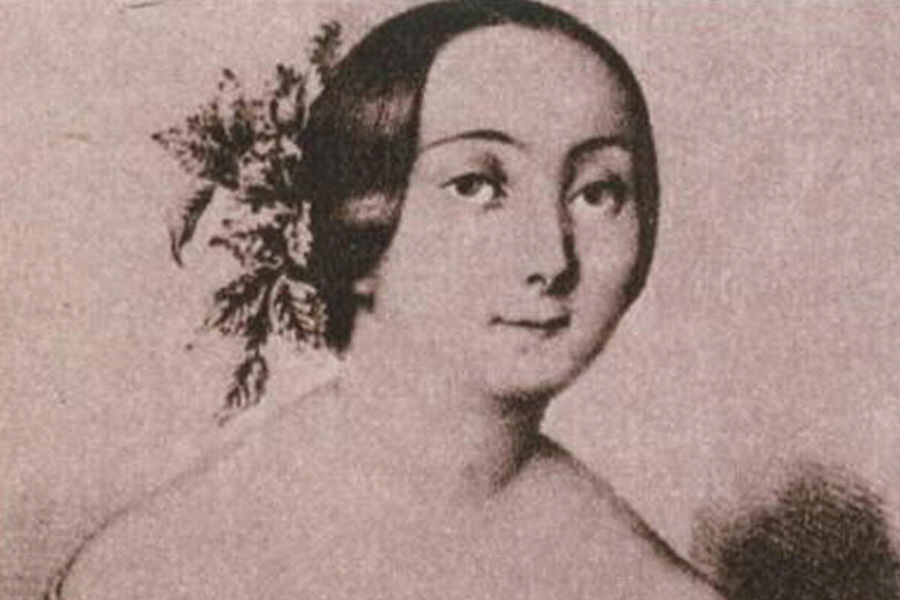
Ida’s face survives in lithographs and portraits, the kind of images that once hung in print-shop windows to tempt passersby. Her name persists in theatrical histories, in the footnotes of biographies of Dumas, in the credits of plays that defined a generation. She appears in later fiction and film as a character within Dumas’s orbit, which is both natural and slightly unfair, since she had her own gravity. Even so, the afterimage is clear: a professional who helped launch new dramas, a woman who negotiated love, law, and reputation without the protections of later eras.
Timeline
- 13 May 1811: Birth in Nancy, variously recorded as Marguerite-Joséphine Ferrand or with the surname Calais in family references.
- Early 1830s: Begins her relationship with Alexandre Dumas and her climb through Parisian stages.
- 1832 to 1839: Active career at Opéra-Comique, Palais-Royal, Porte Saint-Martin, and in 1837 at the Comédie-Française. Creates roles in plays by Dumas, appears in works by Victor Hugo and others.
- 1 February 1840: Marriage contract with Dumas signed, with civil and religious ceremonies in early February.
- 1840: A period in Florence, with growing strains as Dumas travels and spends and Ida recalibrates her life offstage.
- 1844: Formal separation. A pension for Ida is stipulated, and legal frameworks address her dowry and property rights.
- Mid to late 1840s: Ida spends significant time in Italy, associated with the prince of Villafranca. Proceedings in 1847 to 1848 address property and payments, including the ordered sale of Monte-Cristo to cover obligations.
- 11 March 1859: Death in Genoa. Burial follows two days later.
What remains uncertain
Even as I trace her outline, a few areas blur at the edges. The exact conversion of her dowry into modern money is a game of assumptions I avoid. Some genealogical sources spell her family names in variant forms, Ferrand and Calais, and they sometimes diverge on exact birth-day details. The sequence of events in early February 1840 occasionally appears with slight variations in record summaries. And as for the manner of her death, contemporary mention of an apoplexy coexists with later claims of uterine cancer. With figures like Ida, the chorus never quite sings in unison.
FAQ
Was Ida Ferrier the mother of Alexandre Dumas fils
No. Dumas fils was the son of Alexandre Dumas and Laure Labay. Ida was not his mother and did not raise him as her child.
Did Ida Ferrier and Dumas have children together
No. Their marriage produced no children. During parts of their relationship they lived with Marie-Alexandrine, Dumas’s daughter with the actress Belle Kreilssamner, and Ida was involved in her care at times.
How did critics view Ida Ferrier’s acting
Contemporary reception was mixed. Some critics derided her small stature and said her voice sounded slightly veiled. Others, including notable admirers, praised her stage presence and effectiveness in certain roles. She worked steadily at important theaters and originated roles in new Romantic dramas, which speaks to her professional standing.
Which theaters did Ida Ferrier perform in
After appearing at the Opéra-Comique, Palais-Royal, and Porte Saint-Martin, she spent 1837 at the Comédie-Française. She performed new Alexandre Dumas pieces like Teresa, Angèle, and Caligula, as well as Victor Hugo and other contemporary works.
Is it true a remark at a ball forced Dumas to marry Ida
Anecdotes repeat a story about a sharp remark by the Duke of Orléans at a ball that supposedly prompted Dumas to marry. I treat it as a colorful tale rather than verified fact. What is documented is that a marriage contract was signed on 1 February 1840 and ceremonies followed in early February.
How large was Ida Ferrier’s dowry, and what happened to it
Her dowry was recorded at 120,000 francs at the time of her marriage. After the couple separated in 1844, legal actions aimed to secure Ida’s pension and the protection or recoupment of her dowry. The sale of Dumas’s property at Monte-Cristo was later ordered to cover obligations tied to her claims.
Where and when did Ida Ferrier die
She died in Genoa on 11 March 1859. Accounts vary on the cause, some saying apoplexy and others citing uterine cancer. She was buried shortly thereafter in Genoa.
Who was the prince of Villafranca in Ida Ferrier’s life
After separating from Dumas, Ida was associated with the twelfth prince of Villafranca, also called the duke of Salaparuta. Their relationship unfolded within her later years in Italy, in cities such as Rome, Genoa, and Nice.
Did Ida Ferrier resume acting after her marriage
Not in a sustained way. Her regular stage career essentially ended after 1839. Following the wedding and subsequent travel, she did not return to a major theatrical trajectory, although her name continued to appear in dedications and histories of the period.