Origins and a childhood at the edge of a spotlight
A bright center sends light and shadow across generations in every family. In my story, Bette Davis is the constellation and her grandson, J, is the calm figure in the wings. Ashley Hyman. Family Reunion, a television program featuring his grandma, is his only cinematic credit as a child. Although brief, the part positions him in a well-known tradition and suggests a life of calm over spectacle.
When I look at the shape of his public footprint, I see deliberate restraint. He appears, and then he recedes. The outlines are family names and one early appearance. Beyond that, the record thins. It is the kind of faint path a person walks when the noise of fame from a previous generation is enough for everyone.
The Davis lineage
To understand Ashley, I begin with the tapestry around him. Bette Davis stands as a towering figure of American film, fierce and singular, a legend whose professional achievements became cultural touchstones. Her family story stretches across marriages, adoptions, and the complex geography of love and loyalty that accompanies life under the spotlight.
Within that extended structure are adopted children, Margot and Michael Merrill, whose names surface often in retrospectives. There is William Grant Sherry, Davis’s husband and father of Barbara Davis Sherry, known later as B. D. Hyman. There is Gary Merrill, a later husband who shaped parts of the family’s household dynamics. These threads form the background behind Ashley’s quieter place.
Parents and brother
At the center of Ashley’s immediate world are his mother, B. D. Hyman, and his father, Jeremy Hyman. B. D. moved from the orbit of Hollywood into ministry and authorship, writing about her relationship with her mother and later pastoring in evangelical circles. Jeremy, a British executive with entertainment lineage of his own, is woven into industry history through family ties, yet he stayed largely outside the public glare.
Ashley has a brother, Justin. The two names often appear together, listed simply as the sons of B. D. and Jeremy. For all the drama that has swirled around the Davis name, the brothers themselves remain nearly invisible in public accounts, which suggests a family choice to step off the stage and tend to life away from that roar.
A brief screen moment
Ashley’s visible encounter with performance arrives in Family Reunion, a television film that brought multiple generations of the Davis family into the same production. It is a small note in a long score, yet it anchors the fact of his relationship to an icon and gives audiences a glimpse of how legacies sometimes unfold. In a single credit, he is both present and elusive, a child who crossed the curtain once and then let it fall.
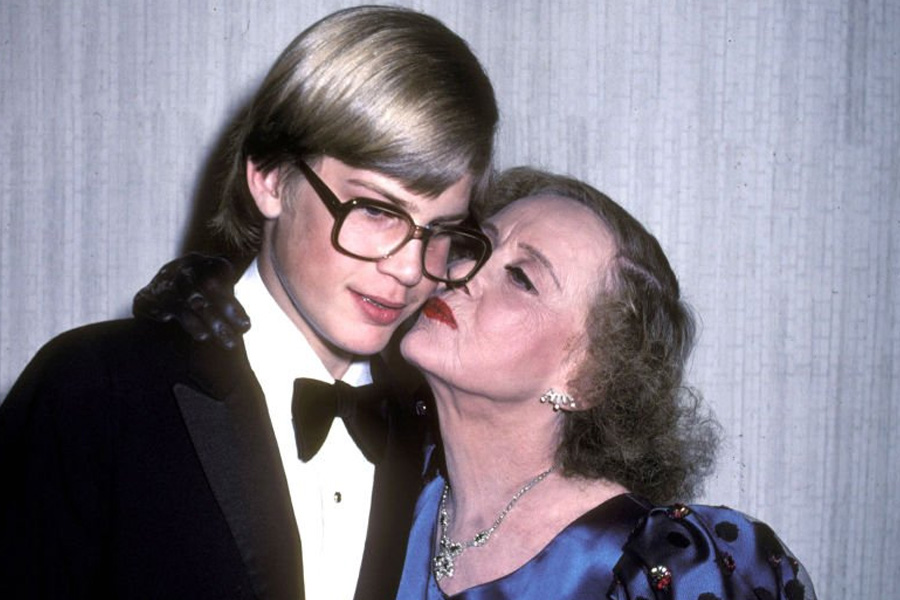
I think of this moment as a snapshot. There is the camera, the instrument of public memory. There is a famous grandmother, the axis around which the project turns. There is a boy, carrying his family’s name, sharing the frame, then carrying it back to private life.
Life beyond the limelight
If Ashley’s childhood included a brush with film, his adulthood seems to prefer silence. There is no widely documented professional path in entertainment, no catalog of recurring roles, no headline arc that would pull him back into public view. In an era that documents everything, his story is almost an act of resistance, the choice to let personal milestones live where they belong, among friends and family.
This absence is not emptiness. It is clarity. Fame and friction often go hand in hand. A person can step back, focus on work and relationships, and let the public record show only what must be known. Ashley appears to be one of those people.
Family tensions and inheritance
No account of this family can avoid the rift created when B. D. Hyman shared her difficult portrait of her mother in the mid 1980s. The book reverberated through the press, the industry, and the household. Estrangement followed. When Bette Davis died, reports of her will and its distribution noted who was included and who was not, turning an intensely personal story into a public one.
For Ashley, this history foregrounds the fact that his public mention often arrives in the context of that controversy. It is the shape of the echo. He did not create the sound, but he lived in its reverberation. He remains largely absent from sensationalism, a point that speaks to his private temperament. The drama belongs to the headlines of another generation, not his.
Recent mentions and public presence
When Ashley’s name appears today, it is usually in retrospectives or family features that seek to map the legacy of Bette Davis. These are stories that look back, gather names, sort relationships, and fill gaps in collective memory. Vintage photos surface, sometimes from fan groups, sometimes from remembrance pages. The images underscore the core truth that he is part of a lineage that still fascinates audiences.
There is no widely recognized social media footprint attributed directly to him, no verified accounts, and no ongoing public engagement that would reframe his narrative. The quiet persists. In the history of celebrity families, that choice feels almost radical.
Net worth and the narrative of money
It is natural for readers to ask about wealth in families connected to Hollywood. With Ashley, credible public estimates do not exist. Estate decisions from decades ago are part of the historical record, but those details do not translate into reliable personal valuations. Money rarely tells the story we think it tells anyway. In this case, the absence of data reminds me to treat speculation as noise and the person as a subject deserving respect.
What remains
What remains are the contours of a life viewed through the lens of family. A mother who wrote and preached. A father rooted in the business side of entertainment. A brother whose profile is as quiet as his own. A grandmother whose filmography fills shelves and syllabi. A single childhood screen credit that serves as a marker rather than a gateway.
I picture Ashley as someone who learned early what fame looks like up close, then decided to let it pass by. He seems to have built a life in the private sphere while the public chronicles recorded only the big names and the big moments. That choice can be a kind of wisdom.
FAQ
Who is J. Ashley Hyman?
J. Ashley Hyman is the grandson of Bette Davis and the son of B. D. Hyman and Jeremy Hyman. He appeared as a child in the television film Family Reunion and has maintained a very low public profile as an adult.
How is he connected to Bette Davis?
He is Bette Davis’s grandson through her daughter B. D. Hyman. His name surfaces in family histories and retrospectives about Davis’s life and legacy.
Did he have a career in acting?
Beyond the childhood appearance in Family Reunion, there is no widely documented acting career for him. Public records do not show a sustained presence in film or television.
Who are his immediate family members?
His parents are B. D. Hyman, an author and pastor, and Jeremy Hyman. He has a brother named Justin. On the broader family tree, his maternal grandparents are Bette Davis and William Grant Sherry.
Why is he mentioned in discussions about inheritance and controversy?
In the mid 1980s, B. D. Hyman wrote about her relationship with her mother, a book that led to public estrangement. When Bette Davis passed away, the distribution of her estate was widely reported, and those reports often listed family members, including grandchildren, which is why Ashley’s name appears in that context.
Is there current public information about his personal life?
There is very little verified information about his adult personal life. He appears to value privacy, and current public accounts are limited to historical family references and occasional vintage photos shared by fans.
What can we say about his net worth?
There are no credible public estimates of his personal net worth. Estate reporting from the past does not translate into reliable figures about his individual finances today.