A Life Shaped by Duty, Faith, and Fire
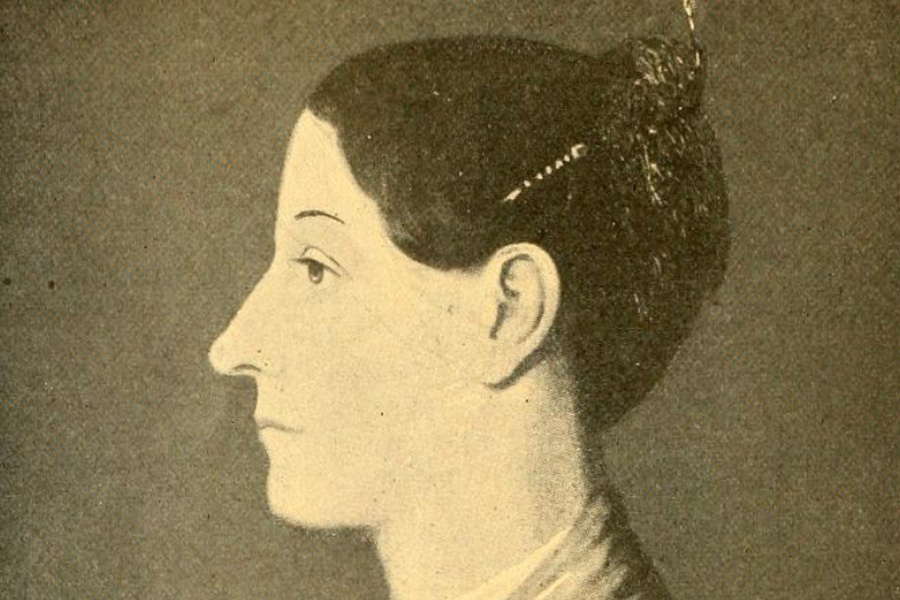
I see Mary Fielding Smith as one of those rare historical figures whose life feels both sturdy and luminous, like an oak standing through winter. She was born on 21 July 1801 in Honeydon, Bedfordshire, England, into a Methodist family of ten children. From the beginning, her world was built on work, belief, and responsibility. That mix stayed with her for the rest of her life.
Mary did not live softly. She lived by effort. She taught school, tutored children, and worked as a governess before marriage. Those early years tell me something important about her character. She was educated, capable, and accustomed to carrying herself with discipline. She was not simply carried by history. She helped carry it.
Her path changed when she joined the Latter-day Saint faith in 1836 after moving to Canada to be near her siblings Joseph and Mercy. Soon after, she moved to Kirtland and entered a world of upheaval that would test every layer of her strength. Her story is not polished. It is full of distance, death, hunger, illness, property loss, and migration. Yet she moved through all of it with a kind of iron grace.
Family Roots That Reached Across the Church
Mary’s life revolves around family. John Fielding and Rachel Ibbotson Fielding had her. She had siblings Joseph Fielding and Mercy Rachel Fielding Thompson, who were prominent in early Church history. Blood, faith, and migration linked their lives.
The Fieldings were a branch that separated into history. Priest and missionary Joseph Fielding was influential. Mercy also bonded with the Smiths. Mary married Hyrum Smith on December 24, 1837, expanding her family again. She joined a prominent early Mormon family through that marriage.
Hyrum was a parent before Mary. His first wife, Jerusha Barden Smith, died, leaving children. Mary took over that household and raised the children. That role counts. It wasn’t ritual. Daily labor without a trumpet was it. She looked after Lovina, Mary, John, Hyrum Jr., Jerusha, and Sarah. She also witnessed Hyrum’s 1844 death in Carthage Jail, which devastated that family.
Her children with Hyrum were Joseph F. Smith (13 November 1838) and Martha Ann Smith (14 May 1841). Joseph F. Smith became the sixth Church president. Martha Ann collected family memories and communications to assist future generations understand their mother’s world. Amazing posterity. A river cut through stone, Mary’s life traveled through generations.
Another family truth stands out. Mary was more than a mother. She protected and cared for others beyond her household. She fostered some Samuel H. Smith children after his death. Her choice reveals her heart. Family wasn’t abstract to her. That was shelter.
Work, Property, and Practical Leadership
Mary Fielding Smith’s career cannot be measured by modern office titles. Her work was more elemental than that. Before marriage, she earned her living through teaching and governess work. After marriage, her labor became domestic leadership, household management, farming, and survival under pressure. That is a career in its own right, even if history has sometimes preferred cleaner labels.
She also handled financial responsibilities with unusual seriousness. Records show her connected to property ownership in Nauvoo, and she later petitioned to sell property to support and educate the children in her care. That detail tells me she was not passive in money matters. She understood that land, goods, and legal claims could become lifelines.
One of the most memorable parts of her financial life is her faithfulness in tithing. Even when food was scarce, she reportedly refused to treat hardship as an excuse to give less. Potatoes, provisions, and sacrifice went into the offering. In my mind, that image is vivid. It is as if she laid a loaf on the altar and asked heaven to do something with the crumbs. That kind of devotion has weight.
Her work achievements were practical, not theatrical. She helped hold a blended family together during exile and imprisonment. She endured the trauma of the Carthage killings. She crossed the plains in 1848 with limited resources. She established a homestead near East Millcreek and built a two-room adobe house by 1850. She cultivated 40 acres. These are not small things. They are the architecture of survival.
A Widow Who Kept Walking
Mary’s life changed forever in 1844 when Hyrum was killed at Carthage Jail. Widowhood could have emptied her future. Instead, it became another terrain she learned to cross. She had children to raise, memories to protect, and a Church to remain tied to even as her world had cracked open.
I find her crossing to the West especially powerful. In 1848 she traveled with the Kimball company, and the story of her argument with Captain Cornelius P. Lott has the edge of legend because it reveals her spirit so sharply. She was not timid. She was not ornamental. She was a woman who had already survived too much to be easily intimidated. She pressed forward and reached the Salt Lake Valley.
Her final years were still marked by work. She lived in Salt Lake City and died there on 21 September 1852, likely from pneumonia, at the age of 51. Even in that short life, she left behind a long shadow of endurance.
The Family Tree That Kept Growing
Mary’s family is more than names. Influence network. Parents gave her roots. She had siblings for company. Hyrum married, had stepchildren, and sacrificed. Joseph F. Smith left her a legacy. Martha Ann remembered. Hyrum became a more demanding mother with her first marriage’s children. Even her extended family, including Mercy and Joseph Fielding, linked her narrative to Church expansion.
Maybe that’s why Mary Fielding Smith is so captivating. She’s in many lines’ center. Daughter, sister, wife, stepmother, mother, widow, pioneer, worker, and believer. Each role layered the whole. Their portrait is bigger than any single event.
FAQ
Who was Mary Fielding Smith?
Mary Fielding Smith was an English-born Latter-day Saint pioneer, the wife of Hyrum Smith, the mother of Joseph F. Smith, and the grandmother of Joseph Fielding Smith. I see her as a foundational family matriarch whose life combined faith, labor, and endurance.
Who were her closest family members?
Her parents were John Fielding and Rachel Ibbotson Fielding. Her siblings included Joseph Fielding and Mercy Rachel Fielding Thompson. Her husband was Hyrum Smith. Her children with Hyrum were Joseph F. Smith and Martha Ann Smith. She also helped raise Hyrum’s children from his first marriage.
What kind of work did she do?
Before marriage, she taught school, tutored, and worked as a governess. After marriage, her work centered on family care, property management, farming, and survival through exile and hardship. Her life was built on action more than title.
Why is she remembered today?
She is remembered for her strength during the death of Hyrum Smith, her devotion to her children, her role in early Church history, and her determination as a pioneer woman. Her descendants also include major Church leaders, which keeps her name alive across generations.
What makes her story especially notable?
Her story is notable because she endured poverty, widowhood, migration, and family responsibility without losing her resolve. She seems to me like a lantern carried through a storm. The wind was fierce, but the light stayed steady.