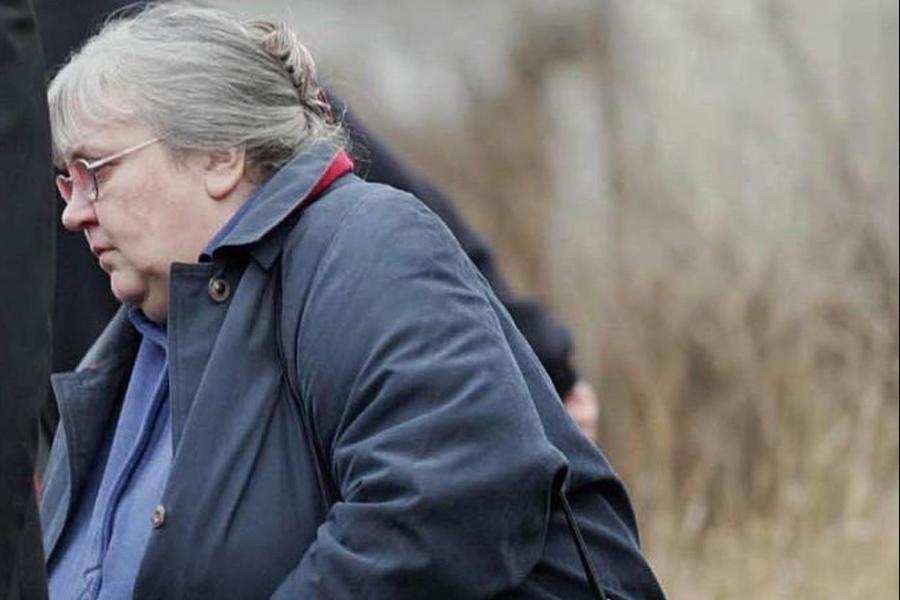
Early Roots in Yorkshire
I picture Primrose May Oxtoby as a young girl stepping across fields in rural West Yorkshire, the rhythm of farm life in her bones and chapel bells in her ears. Born around 1949 to George and Edna Oxtoby, she grew up within a strict Methodist household where duty and restraint were the rule. She left school at 16, practical and eager to start adult life. Window displays became her canvas, a window-dresser arranging light and color, a modest art form that suited a modest world.
Meeting Harold and a Swift, Fateful Turn
The story changes on a bus from Wetherby to Leeds. In 1965, at 17, Primrose met Harold Shipman, a 20-year-old medical student. Within months, she was pregnant. The speed of events was a shockwave through her family. A hurried marriage followed in late 1966, a union formed under pressure and public scrutiny. Her parents disowned her, a decision that hardened with time. It never softened, not even after decades had passed.
Building a Family, Holding the Fort
Primrose and Harold had four children, a daughter named Sarah and three sons named Christopher, David, and Sam. The family years spanned the late 1960s into the early 1980s, a long arc of packed lunches, school runs, and the quiet logistics of ordinary life. Primrose worked when and where she could. She was a part-time childminder. She ran a small sandwich shop. Later she sat at the front desk as a receptionist at her husband’s practice in Hyde. She drove the children to school in a modest car and kept a steady routine while Harold worked. It was a household threaded together by her dependability, stitched with small acts of care.
Loyalty in a Storm
When Harold Shipman was arrested in 1998, the life that had seemed so ordinary was pulled inside out. Primrose withdrew from police and press, then visited him daily on remand, quiet and constant. During the 2000 trial, she attended with a composure that drew attention, bringing chocolates during breaks, watching the proceedings with the kind of focus that leaves a mark. Even after his conviction for 15 murders, she held firm, insisting on his innocence. She visited him in prison, wrote letters, and urged him to tell her everything. It was a loyalty some saw as devotion, others as denial. I read it as a human response to a reality too dreadful to fit. The mind finds a shape it can hold.
Parents and a Permanent Estrangement
Primrose’s severed bond with her parents is one of the story’s unhealed wounds. Their disapproval of the teenage marriage hardened after a 1976 incident when Harold was fined for forging prescriptions. Whatever hope remained between them disappeared. Her mother outlived her father. Neither reconciled with Primrose. This divide is a fissure that ran right through her adult life, a canyon that could not be bridged.
A Sister on the Periphery
Primrose had an older sister named Mary, reported as disabled and living nearby. Beyond that, little is publicly known. Primrose herself was not a social figure. Her visits to family were quiet. She rarely socialized, and when she did, it was usually to see her sister or to keep her connection with Harold. This is not the architecture of a public life. It is the geometry of a private one.
Media Mirrors and Distorting Glass
The public image of Primrose was never hers to define. It was reflected back through the glass of Harold Shipman’s crimes. During the trial and inquiry, journalists painted her as a devoted wife who stood by her husband to the end, or as an enigma whose interior world was unreachable. In the tabloid corners, the focus drifted toward her weight, her household, details that felt like small stones tossed at a larger tragedy. Observers called her relationship co-dependent. I think labels are easy to apply and hard to justify in the face of such extraordinary circumstances. A life like Primrose’s is a difficult landscape to read from the outside.
Aftermath, Pension, and Withdrawal from Public View
Harold Shipman died by suicide in January 2004. The shock of his death filled more headlines, and another layer of complexity folded into Primrose’s life. Reports stated that his death entitled her to an NHS widow’s pension. A significant lump sum was noted at the time, alongside an annual payment. His timing raised speculation about whether benefits were part of his final calculations. Primrose did not feed the speculation. She retreated further from public attention, changing her name and moving several times to avoid the spotlight. She settled quietly in Yorkshire, keeping to herself, avoiding interviews, and declining to engage in retellings of a story that has already been told many times.
Work, Income, and the Texture of Daily Life
Primrose never pursued a high-profile career. She had considered art college as a young woman, but life took her elsewhere. The part-time roles she held, the small business she ran, and the receptionist work she did all suggest a household that lived within its means. These details illuminate something important. Primrose’s life was not built on fame or wealth. It was built on habits, schedules, and an instinct for perseverance. A lighthouse does not move. It holds its ground, even as storms rearrange the horizon.
The Children’s Path to Privacy
As adults, Primrose’s children changed their names and stepped away from the public eye. Very little is known about their lives, except that they kept their loyalty to their father during the trial and attended his cremation in 2004. Their silence feels like a boundary drawn with intent. I respect that boundary. Not every story needs new chapters written in view of the world.
The Public Inquiry and the Thinnest Possible Answers
Primrose testified at the public inquiry in late 2001. She was granted immunity, a procedural layer that made it possible for her to speak without further legal exposure. She offered brief answers and maintained her belief in Harold’s innocence. Those moments added little light to the wider questions, yet they fit the quiet profile that had followed her for years. She held to a line and did not break it.
Life in Almost Total Isolation
In recent years, Primrose has remained away from microphones and cameras. She does not maintain a public presence. When documentaries or media profiles revisit Harold Shipman’s crimes, her name appears as a figure who stood by him and then left the public arena. There is a sense that she chose privacy as survival, and that she keeps it like a cloak.
FAQ
Who is Primrose Shipman?
Primrose Shipman is the wife of Harold Shipman, a British general practitioner later convicted for the murders of multiple patients. Born around 1949 in rural West Yorkshire, Primrose led a private life centered on family, part-time work, and a steady support of her husband during and after his trial.
How many children did Primrose and Harold have?
They had four children. Their eldest was a daughter, Sarah, followed by three sons named Christopher, David, and Sam. As adults, the children changed their names and stepped away from public attention.
Why did Primrose’s parents disown her?
Primrose’s strict Methodist parents disapproved of her teenage pregnancy and swift marriage in 1966. Their estrangement deepened over time, and became permanent after Harold was fined for forging prescriptions in 1976. They never reconciled with Primrose.
Did Primrose believe Harold Shipman was guilty?
Throughout the investigation, trial, and public inquiry, Primrose maintained her belief in Harold’s innocence. She visited him in prison, wrote supportive letters, and showed unwavering loyalty even after his convictions.
What was Primrose’s career?
Primrose did not pursue high-profile work. She left school at 16, worked as a window-dresser, and over the years held part-time roles, including childminding and running a small sandwich shop. In the 1990s, she worked for several years as a receptionist at Harold Shipman’s medical practice.
Did Primrose receive a pension after Harold Shipman’s death?
Reports at the time stated that Harold’s death entitled Primrose to an NHS widow’s pension, including a lump sum and an ongoing annual payment. The timing of his suicide led to public speculation, but Primrose did not engage with those discussions.
Where did Primrose go after the trial and Harold’s death?
Primrose withdrew from public view. She changed her name and moved multiple times, eventually settling quietly in Yorkshire. She has not given interviews and has kept her life private.
Did Primrose testify at the public inquiry?
Yes. Primrose appeared at the public inquiry into Harold Shipman’s crimes in late 2001. She was granted immunity and gave brief answers, maintaining her position that Harold was innocent.