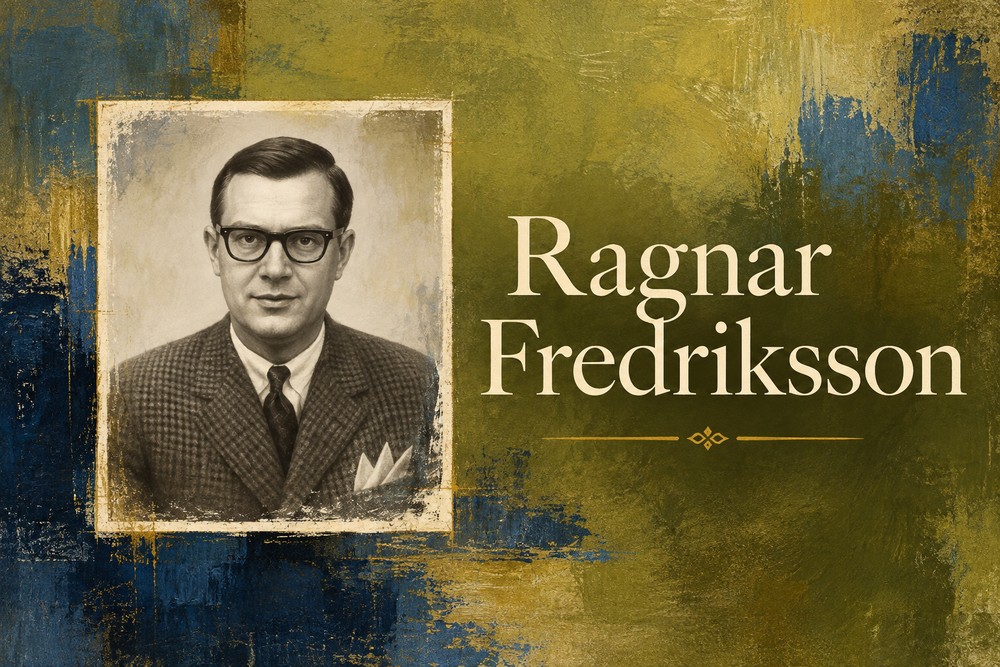
Ragnar Fredriksson, a life at the bandstand’s edge
When I think about Ragnar Fredriksson, I picture a bass line that holds a song together without calling attention to itself. He is best known to the public as the first husband of Anni-Frid Frida Lyngstad, long before stadium lights and ABBA transformed her voice into a global beacon. Yet Ragnar’s place in that story is not a footnote. It is a starting chord. He stood in the rooms where Frida learned to command a microphone, sharing stages and set lists in the early 1960s. He worked, he played, he built a family. The spotlight may not have chased him, but the music did.
Meeting Frida in the pulse of early 1960s Sweden
The early 60s in Sweden were dance floors and jazz corners, village festivals and late-night rehearsals. Frida was a young singer with an ear for melody and a taste for swing. Ragnar, by most accounts, played in the bands that backed her. Their world was practical and romantic at once. There were gigs to book, amplifiers to lift, and a future to imagine. It feels right to see them side by side in that scene, sharing call sheets and small-town dreams.
Marriage, music, and work
Ragnar and Frida married on 3 April 1964. The music did not stop. They worked the local circuits, stringing weekends together with songs that paid the bills. In those retellings Ragnar surfaces as both musician and salesman, a man who balanced steady work with a musician’s irregular calendar. It is a pattern familiar to anyone who has lived inside music. Art fills the evenings. Day jobs keep the cupboards full.
I love how ordinary that sounds. No theatrics. Just labor, rhythm, and an early belief that a shared life could find its tempo.
Children and the domestic rhythm
Before and after the wedding, the family grew. Hans Ragnar arrived first, followed by a daughter, Ann Lise-Lotte, born in 1967. The photographs from this period often show the same quiet grace that infuses the text. Young parents in simple rooms. Instruments leaning against the wall. New routines formed around feedings, rehearsals, and the noise of children that erases the silence of any home.
In those small rituals I hear Ragnar again. Not as a public figure, but as a father whose name is stitched into school records, holiday tables, and the memories that accumulate in every household.
Paths parting and new journeys
The couple separated in the late 1960s and finalized their divorce in 1970. Frida’s path would soon accelerate into the era of ABBA. Ragnar’s path turned away from the press and toward a more private life. This was not a dramatic split in the public’s imagination so much as a change of key. Later biographies kept Ragnar’s name in the family verses, while the choruses were sung by the global machine that formed around ABBA’s success.
What stands out to me is the balance of ordinariness and meaning. Many people part and go on. Yet in this story, Ragnar remains a steady landmark. He is the father of two children whose lives connect the quiet rooms of the 60s to the stadium echoes of the 70s and beyond.
Frida’s later chapters and the family constellation
Frida’s later relationships are well known. She married Benny Andersson in 1978, a partnership that mirrored the creative electricity of ABBA’s peak, then later married Heinrich Ruzzo Prinz Reuss von Plauen in 1992. In more recent years she has been linked with Henry Smith. Ragnar’s name appears in these narratives as foundation, not headline. The family tree branches in public, but its roots reach back to a small circle of musicians sharing music stands and starter apartments.
Loss, remembrance, and the echo of a daughter’s voice
Ann Lise-Lotte, the daughter Ragnar and Frida welcomed in 1967, later had a son named Jonathan. Ann Lise-Lotte died in a car accident in January 1998 in New York, a loss that sits like a minor chord in every recounting of the family’s story. It is impossible to measure the dimensions of grief from the outside. Yet I return to Ragnar’s presence as a father and a grandfather, and I imagine how the people who once circled a turntable in the 60s came to circle one another again in hard times.
Work, musicianship, and the art of being local
There is a kind of musician who catalogs life city by city, dance hall by dance hall. Ragnar reads like one of those artists. Contemporary accounts describe him in the bands where Frida sang, a bassist or band member who made the songs land on the floor where people were listening. There is not a long, public discography tied to his name. No chart entries. No awards cabinet. Yet that is not what defines a musician’s worth to the people who heard him. Local musicians shape the texture of a place. They are the soundtrack of Saturdays and anniversaries, the steady hands of a thousand evenings. Ragnar seems to belong to that noble company.
The private man behind public mentions
What we do not know about Ragnar is nearly as telling as what we do. The record is thin by design or by accident. There are few direct interviews and little published detail about his later life. Even basic facts that typically populate public profiles remain spare. This privacy resists the easy temptation to paint him in bright colors he never asked for. When someone lives in the margin of history, it can be a mark of humility, or simply the way a life unfolded. Either way, I read that quiet as a choice to let others sing lead while he kept time.
A simple timeline that still resonates
- Early 1960s: Ragnar plays in the bands where Frida sings. They form a partnership that is both musical and personal.
- 1964: Marriage. Work continues. The family grows around the gig calendar.
- Mid to late 1960s: Two children join the story. Hans Ragnar is the elder. Ann Lise-Lotte is born in 1967.
- 1968 to 1970: Separation followed by divorce. The family reconfigures.
- 1970s onward: Frida’s star ascends. Ragnar’s public footprint narrows, but his role in the family remains constant in every telling.
I find that arc beautifully human. It is not the arc of a headline. It is the arc of a life whose significance is measured in rooms, not arenas.
Ragnar’s legacy, heard rather than seen
To write about Ragnar Fredriksson is to listen for overtones. He is heard in the stories of his children. He is seen in photographs where instruments rest at ease. His presence gives context to Frida’s early courage and to the domestic scenes that all great careers rise from. There is a modesty in his silhouette that I respect. Perhaps that is his legacy. A proof that you can be essential to the song without stepping into the solo.
FAQ
Who was Ragnar Fredriksson?
Ragnar Fredriksson was a Swedish musician and salesman who is widely known as the first husband of Anni-Frid Frida Lyngstad. He played in the dance and jazz bands where Frida sang in the early 1960s, married her in 1964, and became the father of her two children.
When did Ragnar Fredriksson marry Anni-Frid Lyngstad?
They married on 3 April 1964. Their relationship began in the early 1960s through the local music scene where both were active.
Did Ragnar have a music career of his own?
Ragnar performed in bands and is described as a working musician, often in the same ensembles where Frida sang. He did not cultivate a widely documented solo career or a public discography, but he represents the essential world of local professional musicians.
Who are Ragnar Fredriksson’s children?
Ragnar and Frida had two children. Their son is Hans Ragnar. Their daughter is Ann Lise-Lotte, born in 1967.
What happened to Ann Lise-Lotte?
Ann Lise-Lotte died in a car accident in January 1998 in New York. She had a son named Jonathan. Her story appears in many retellings of the family’s history and remains a source of profound sorrow.
Is there public information about Ragnar’s later life or net worth?
Public information about Ragnar’s later life is limited. There are no credible public net worth estimates associated with him. He appears in family histories and profiles of Frida, but extensive standalone coverage of his personal life is scarce.
Is Ragnar Fredriksson still alive?
Public reporting about Ragnar’s later years is sparse. Some family notices suggest he may have passed away, but there is no widely circulated obituary that confirms a specific date. In the absence of clear public records, it is best to treat the question with caution and respect for privacy.