Early Life and Artistic Formation
I first met Sophie De Stempel through her canvases. They read like diaries of observation, intimate and lucid, built from years of looking hard at the world. Accounts of her early path describe a painter who started young, studying in earnest from the age of sixteen. I imagine those formative days as a corridor of quiet rooms and studio light, with the scent of linseed oil and the sound of charcoal on paper. The urgency of a teenager choosing art suggests a temperament tuned to attention. That hunger for seeing has stayed with her.
By the time she found her rhythm in London, Sophie had already learned to treat the everyday with ceremony. A kettle in morning light, a bed with its lived-in folds, the geometry of city streets after rain. These are not grand gestures, yet her paintings give them gravity. It is the gravity of presence, which is, in the end, the painter’s first instrument.
Working With Lucian Freud
Sophie’s pivotal apprenticeship unfolded in the studio of Lucian Freud, beginning in the early 1980s and continuing for much of that decade. It was not simply a period of modeling or assisting. It was an immersion into a rigorous way of seeing. Freud was a hard tutor. Precision mattered. Honesty mattered more. Under that gaze, Sophie learned how a face might become a landscape, how flesh can be recorded as weather, how a bed could become a continent of folds.
I picture those years as a long conversation between painter and subject, between painter and painter. To study in such proximity is to learn about the stubbornness of paint and the patience of looking. The lessons are embedded not only in technique but in ethos. Her later work carries that ethos forward, yet it is unmistakably her own voice. The influence is present, but it never crowds her originality.
Teaching and Exhibitions
Teaching, for Sophie, has been an extension of practicing. She has tutored drawing and engaged deeply with students and peers, sharing the discipline she absorbed and refined. The act of teaching requires generosity. The act of drawing requires courage. For her, these are compatible traits.
Exhibition histories record a steady professional life rather than a meteoric arc. Galleries known for championing strong figurative work have presented her paintings and pastels. The subjects vary, but the surfaces stay true to an observant eye. Still lifes appear like short stories. Portraits settle into their chairs and look back. Cityscapes of West London turn into maps of time, the corners and shop fronts carrying traces of day-to-day rituals. When I see these images, I can almost hear the bus brake and the buzz of a cafe at mid morning.
Marriage to Sir Ian Holm
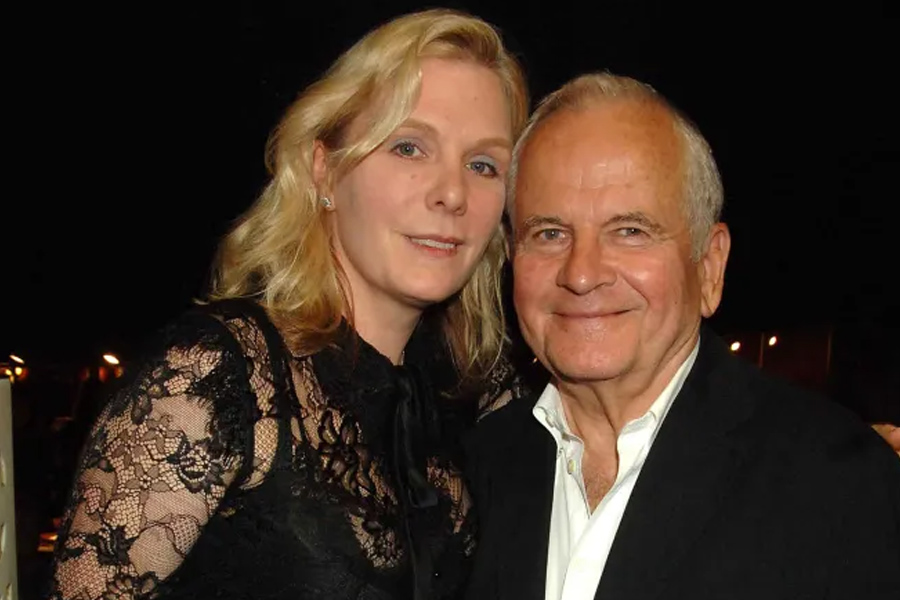
The domestic world of Sophie De Stempel has its own chapter, and it matters. She married Sir Ian Holm in 2003. Holm was already a figure of immense range and reputation, a stage actor who translated intensity flawlessly to film. Their partnership lasted until his death in 2020. Some marriages are described as a duet. This one feels like a chamber piece, composed in layers of art and memory.
Sophie drew and painted Holm, including in the late chapters of his life. There is tenderness in those images. Not a sentimental tenderness, but the kind that comes from staying close, from translating presence into marks. Portraiture under such conditions is something like holding a hand in pigment.
Stepchildren and Family Dynamics
Ian Holm’s family constellation extended beyond Sophie, and through marriage she became part of it. Holm was a father of five. Jessica and Sarah-Jane, then Barnaby and Lissy, and later Harry. Their stories belong to them, and public accounts name them without embellishment. Sophie’s place in that constellation is clear. She did not have children with Holm, but she is part of a living family as a stepmother and as the keeper of portraits that remember him.
This is the human texture behind the artist’s studio. Brushes in a jar. A portrait on the easel. Phone calls and birthdays. From the outside, it can look like pure biography. From the inside, it is the pattern of relationships that sustain a life in art.
Style and Subjects
If I step back and ask what defines Sophie’s painting, I start with fidelity. She tries to let objects speak. Beds appear often, and they become both staging ground and memory theater. Fabric turns into terrain. Light snaps into attention. Portraits carry the pressure of time, as if the sitter might move in the next breath.
Her line is observant, her color tempered, her surfaces attentive without fuss. There is a refusal to decorate for its own sake, a compositional honesty that I find refreshing. When she paints London, she paints a living city, not a postcard. There is rain. There is moss on brickwork. There are windows holding their reflections like low notes.
Presence in the Art Market and Public Eye
Sophie’s market presence is modest and consistent. Works have appeared at auction, with prices reflecting an artist who is appreciated by collectors who follow figurative painting closely. Her reputation has grown in studios and galleries rather than in headlines. I respect that trajectory. It suggests a practice built on the work itself.
Beyond the market, she has maintained a quiet public presence, appearing with Holm at cultural events and, more recently, sharing studio glimpses on social platforms. Those images deliver a clear message. This is an artist who still looks closely and still trusts the act of drawing.
Timeline Highlights
Sophie began painting earnestly as a teenager. Her formative professional period unfolded in the 1980s while working with Lucian Freud. By the early 2000s she was actively teaching and exhibiting, adding classroom engagement to her studio practice. In 2003 she married Ian Holm, and in the years that followed she continued producing portraits, still lifes, and city scenes. The year 2020 marked Holm’s passing, a public moment that also cast fresh attention on her portraits and tributes. Through the 2020s, she remains present in galleries and on social channels, adding new work to a portfolio built on careful, sustained looking.
Family Members in Focus
When I write about families in relation to artists, I try to honor limits. Sophie’s marriage to Ian Holm is known and documented. He is remembered for extraordinary performances, from the stage to roles that fans revisit in recurring film marathons. His five children are named in public accounts of his life and legacy. As a private citizen and artist, Sophie stands alongside that lineage, contributing portraits and a body of work that tangibly remembers him. There is dignity in this way of being seen.
FAQ
Who is Sophie De Stempel?
Sophie De Stempel is a British painter and teacher whose work spans portraits, still lifes, and city scenes. She trained young, built a formative relationship with Lucian Freud during the 1980s, and has continued to teach, exhibit, and draw with a rigorous eye. Her paintings prioritize presence and particularity, turning the familiar into quietly resonant images.
What was her relationship to Lucian Freud?
Sophie worked closely with Lucian Freud across much of the 1980s, modeling and learning in the atmosphere of a studio where observation ruled. That experience shaped her approach to form, flesh, and the physics of seeing, but she developed her own voice. The influence functions like a compass rather than a cage.
Did Sophie De Stempel and Ian Holm have children together?
No. Public accounts of their marriage record that Sophie and Ian Holm did not have children together. Holm had five children from previous relationships, and Sophie became part of that family as a stepmother.
Who are Ian Holm’s children?
Ian Holm’s children are named publicly as Jessica, Sarah-Jane, Barnaby, Lissy, and Harry. Their lives are their own, and references to them typically appear in the context of Holm’s obituary and career retrospectives. Sophie’s role connects through marriage and memory.
Where can I see Sophie De Stempel’s work?
Her work has appeared with respected galleries that champion figurative painting, and she has maintained a studio presence that occasionally surfaces on social channels. Contemporary exhibitions and auction listings offer a practical pathway to viewing her paintings and pastels in person or online.
What is known about her art market presence?
Sophie’s works surface periodically at auction, with prices consistent with a dedicated, recognized painter rather than a speculative phenomenon. The numbers tell only part of the story. The fuller account is on the surface of her paintings, in the lived weight of bedsheets and the delicate mapping of faces.
How would you describe her style?
Attentive, humane, and grounded in observation. She gives weight to ordinary moments. Her color is controlled and truthful, her compositions direct. When she paints fabric, it becomes a topography. When she paints a face, time enters the room.